
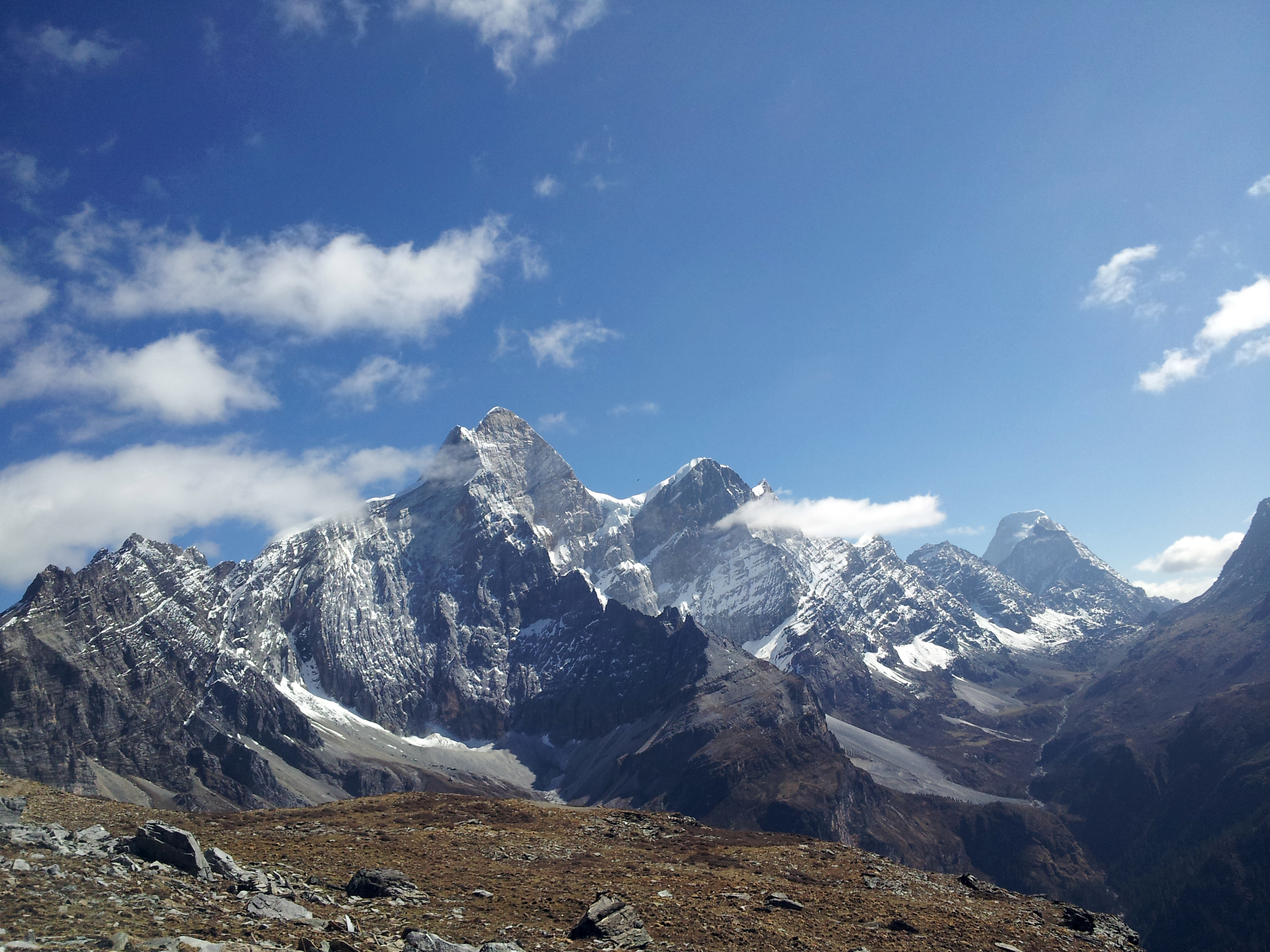
*▲ The three sacred peaks of the Rock Trek: Chenrezig, Jambeyang and Chanadorje*
In today's Chinese hiking community there is one route treated as legendary - the "Rock Trek" (洛克线). It starts at Muli in Sichuan, crosses the Gongga Range, and ends at Yading in Daocheng: about 70 km in all, crossing four passes above 4,500 m. Hikers who complete it tend to post one line on their WeChat Moments: "Finish the Rock Trek and you can brag about it for the rest of your life."
Few people know that this route wasn't designed by modern hikers. In 1928 it was blazed by a botanist named Joseph Rock (约瑟夫·洛克), who walked it out with a mule train and 21 Naxi companions.
1928: Rock's expedition into the Gongga Range
By 1928, Rock had already lived in Lijiang for six years. He had written many articles and taken many photographs for National Geographic (国家地理), and his reputation was growing.
That year he heard that in Muli there was a lamaist kingdom, ruled by a king called the "King of Muli", governing a place cut off from the world. Within the King of Muli's territory lay three sacred mountains - Chenrezig, Jambeyang and Chanordorje - of breathtaking beauty, where no Westerner had ever been.
Rock wrote to the King of Muli asking to visit. The king replied: come, you are welcome.
In March 1928, Rock set out from Lijiang for the first time, passed through Muli, and entered the Gongga Range. He travelled with 21 Naxi companions and dozens of pack horses carrying tents, specimen presses, a camera and a typewriter.
They walked for a whole month. From Lijiang to Muli, and from Muli into the Gongga Range, they crossed mountains and ridges, sleeping in the open. Rock wrote in his diary: "This is the hardest road I have ever walked. But it is also the most beautiful."
In June 1928, Rock set out a second time. This time he went even farther, all the way to Yading, and saw the three sacred peaks. He was the first Westerner to reach this place.
He took a vast number of photographs - snow mountains, glaciers, forests, alpine meadows, lamaist temples. These were later published in National Geographic and stunned the Western world.
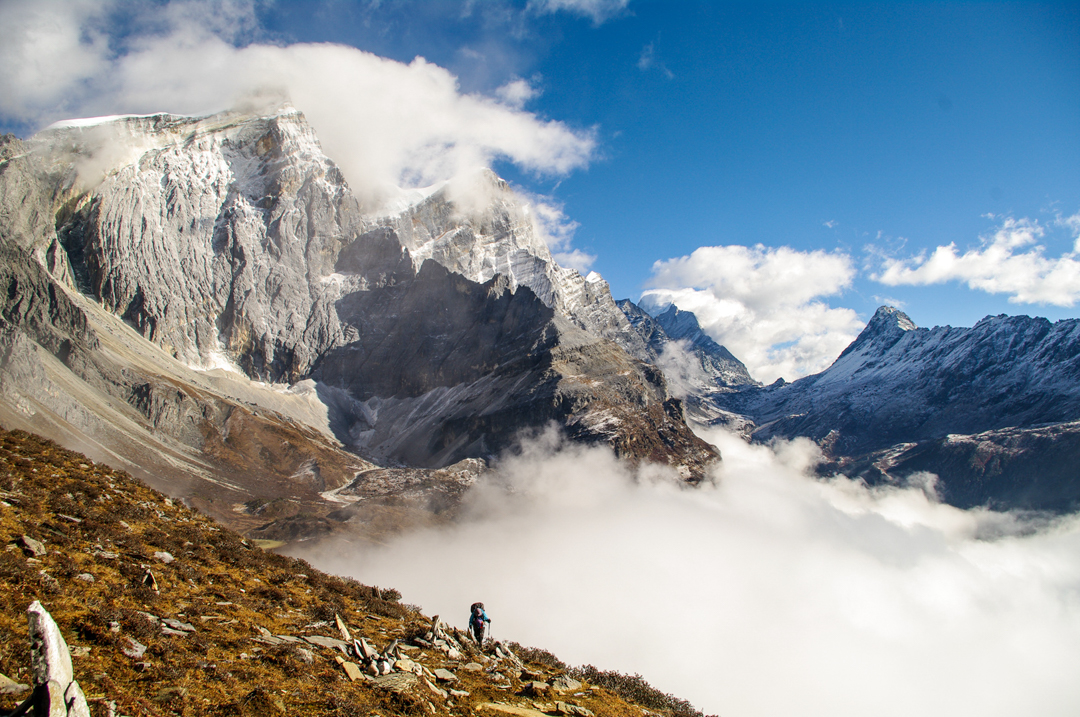
*▲ A hiker standing on a ridgeline of the Rock Trek, looking out over the mountain ranges*
Hilton and Lost Horizon
Those photographs and articles Rock published in National Geographic were seen by a British writer. His name was James Hilton.
In 1933, Hilton wrote a novel called Lost Horizon. It described a place called "Shangri-La" - a lamaist monastery ringed by snow mountains, an earthly paradise of eternal youth, peace and quiet.
The book took off at once. "Shangri-La" became a byword for an earthly paradise. Hollywood even made it into a film, to worldwide sensation.
Many people say that the "Shangri-La" Hilton wrote of took its inspiration directly from Rock's photographs and articles. The snow mountains, the lamaist temples, the Tibetan highlands Rock photographed - that is the Shangri-La of Hilton's pen.
Later, Zhongdian County in Yunnan simply renamed itself "Shangri-La City" to ride on this brand.
But Rock himself never once used the word "Shangri-La". He was just a botanist, an explorer. He simply photographed what he saw, wrote it down, and published it in a magazine.
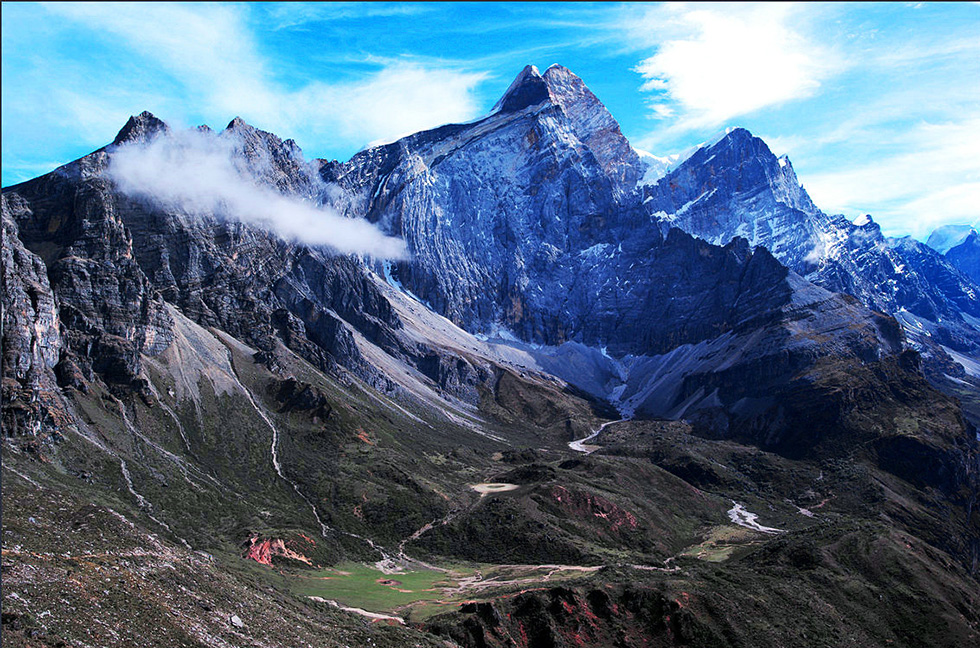
*▲ High alpine valleys and Tibetan villages along the Rock Trek*
The Rock Trek today
Today's "Rock Trek" is a classic long-distance hiking route. It starts at Duluo Village in Shuiluo Township, Muli County, Liangshan Prefecture, and ends at Luorong Pasture in the Yading scenic area, Daocheng County, Ganzi Prefecture.
The whole route is about 70 km, a 5-7 day hike. It crosses four passes above 4,500 m:
- 4,656 m Pass
- 4,705 m Pass
- 4,760 m Pass
- Black Lake Pass
The whole route sits above 4,000 m, with the highest point close to 5,000 m. It is a severe test of a hiker's fitness and acclimatisation to altitude.
But the scenery is top-class. Along the way you will see:
- The three sacred peaks: Chenrezig, Jambeyang and Chanadorje
- High alpine lakes: Milk Lake, Snake Lake and Black Lake
- Primeval forest, alpine meadows and glacial remains
- Tibetan villages and lamaist temples
Every year from September to October is the best time to walk the Rock Trek: the weather is stable, the autumn colours are at their best, and it is the golden season for hiking.
The two ways to walk the Rock Trek
Today there are two main ways to walk it:
The first: the Muli-to-Yading traverse (the classic Rock Trek)
- Start: Duluo Village, Shuiluo Township, Muli County
- Finish: Luorong Pasture, Yading scenic area
- Duration: 5-7 days
- Difficulty: high-altitude hiking, requires some experience
- Suited to: hikers with high-altitude trekking experience
The second: the big loop Lijiang - Lugu Lake - Muli - Yading
- Start: Lijiang
- Passing: Lugu Lake, Yongning, Muli
- Finish: Yading
- Duration: 7-10 days
- Difficulty: moderate; you can drive to the trailhead
- Suited to: visitors with plenty of time who want to see Lugu Lake along the way
Many outdoor clubs run guided Rock Trek treks, usually 7 days and 6 nights, costing roughly ¥5,000-8,000 and including guide, horsemen, equipment, food and lodging.
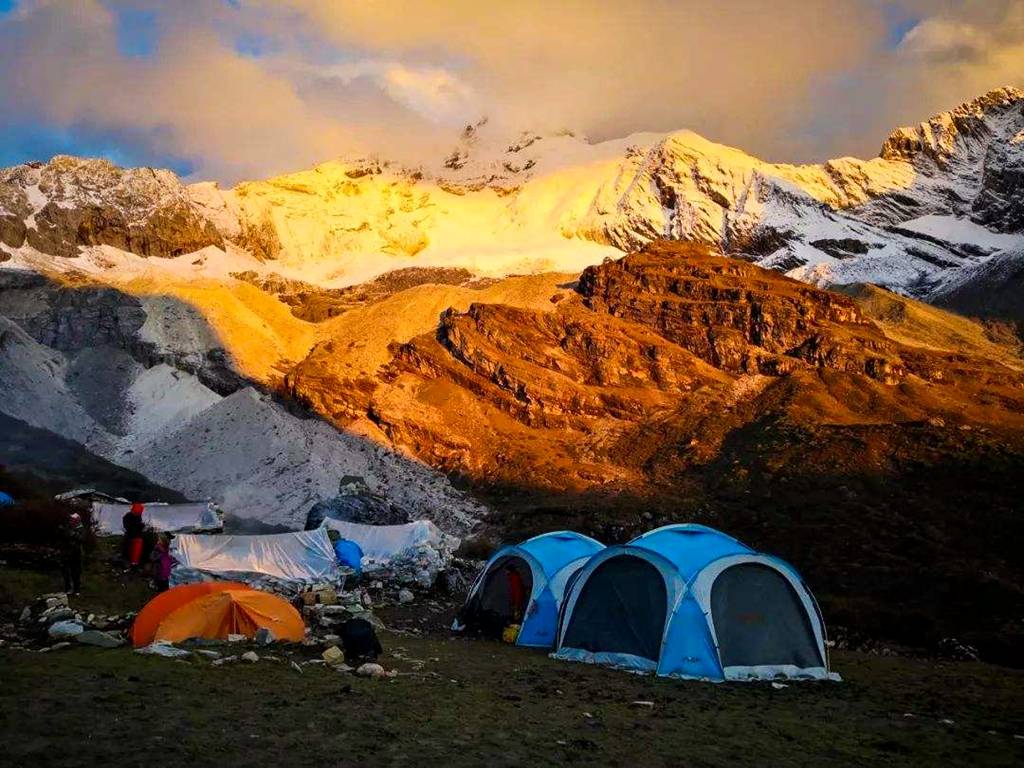
*▲ A camp on the Rock Trek, tents beneath the golden peak at sunrise*
What to prepare for the Rock Trek
If you want to walk the Rock Trek, you'll need the following:
Gear:
- High-altitude hiking boots (waterproof)
- Hard-shell jacket and trousers, fleece layer
- Sleeping bag (comfort rating -10°C)
- Tent (four-season)
- Trekking rucksack (60 litres or more)
- Trekking poles (a pair)
Medicines:
- Hongjingtian / Rhodiola (start a week ahead)
- Gaoyuan'an altitude-sickness tablets
- Ibuprofen (for headaches)
- Cold medicine, stomach and bowel medicine
- Plasters, bandages
Other:
- ID card (essential)
- Sunscreen (SPF50+)
- Sunglasses (against snow blindness)
- Head torch
- Power bank
- Plenty of cash (there's no signal on the way)
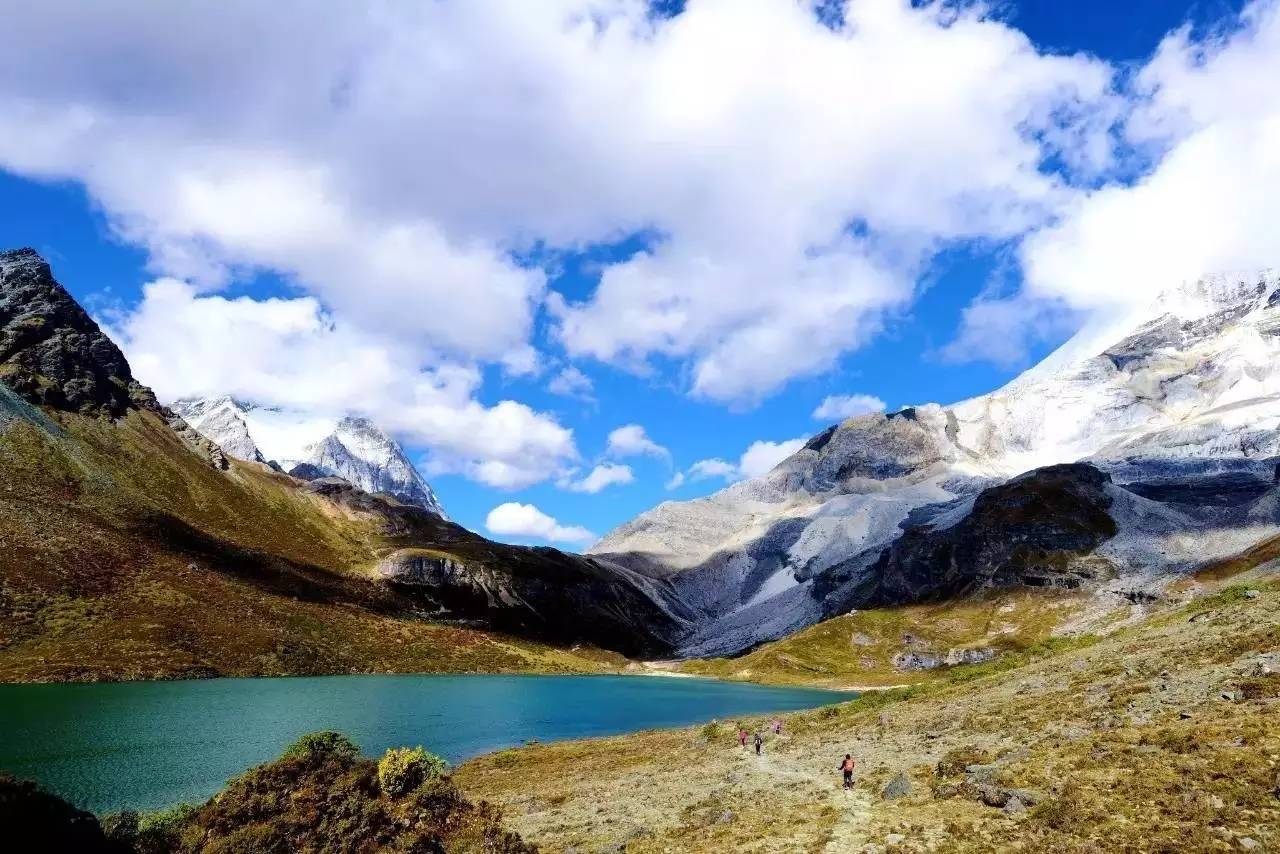
*▲ A high alpine lake along the Rock Trek, snow mountains reflected in the water*
How the Rock Trek relates to Lugu Lake
Few people know that the Rock Trek and Lugu Lake are actually connected.
When Rock set out from Lijiang for Muli, one of his routes passed through Lugu Lake. He went from Lijiang to Yongning (永宁), and from Yongning to Muli - the whole way on old mule-train tracks.
Today you can still follow this road from Lugu Lake to Muli. Starting from Yongning Township at Lugu Lake, passing Wujiao Township in Sichuan, you reach Shuiluo Township in Muli County. It's about 100 km the whole way, and the drive takes a full day - all mountain road, very bumpy.
Many hikers walking the Rock Trek first go to Lijiang, then spend a couple of days at Lugu Lake, before setting off from Lugu Lake to Muli to begin the trek. Walking it this way, you take in both the lake-and-mountain scenery of Lugu Lake and the hiking route of the Rock Trek - killing two birds with one stone.
Why it's called the "Rock Trek"
Why is this hiking route called the "Rock Trek"?
Because 90 years ago, Rock was the first person to walk this route through. He took his 21 Naxi companions and, where there was no road, made one. The photographs he took, published in National Geographic, let the whole world know this place.
Later hikers walked the same way Rock had gone. To commemorate him, they named the route the "Rock Trek".
Today, when you walk the Rock Trek, the scenery you see is almost exactly what Rock saw 90 years ago. The snow mountains are still those three snow mountains, the lakes are still those lakes, the forest is still that forest.
Only the people have changed. Ninety years ago it was Rock and his mule train; today it's hikers carrying rucksacks.
What hasn't changed is the scenery - that feeling, standing on a 4,500 m pass, looking out at the distant snow peaks and lakes, and knowing how small you are.
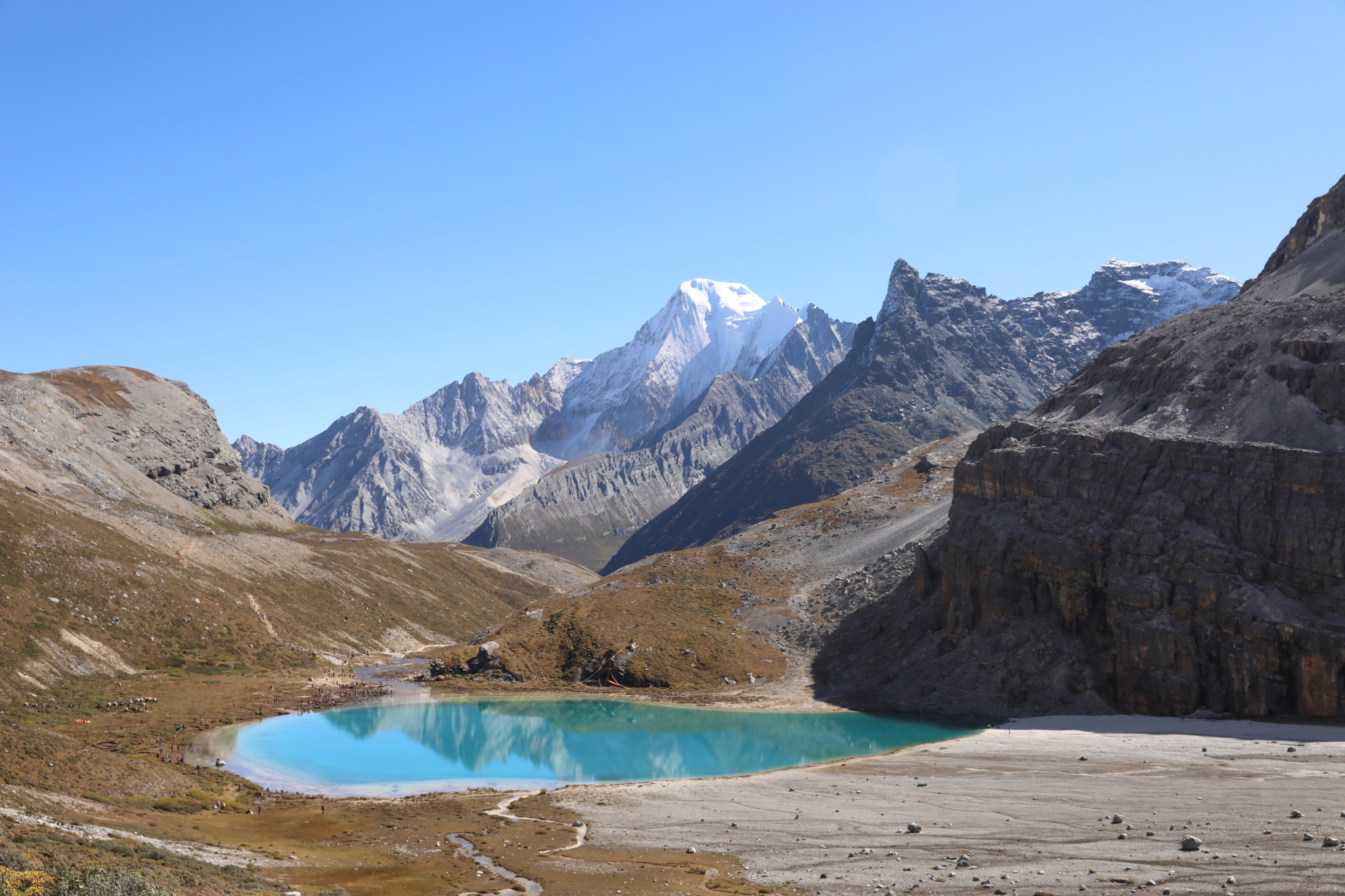
*▲ Milk Lake, the most iconic sight on the Rock Trek, a high alpine lake ringed by snow mountains*
That is probably the appeal of the Rock Trek - and the reason why, 90 years ago, Rock was willing to risk his life, again and again, to walk into these mountains.
---
Related reading: