A Century of Rock

Joseph F. Rock · 1922–1949 · Southwest China

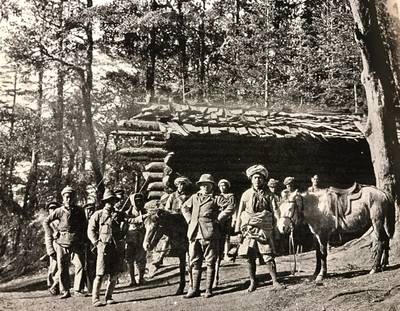
Joseph F. Rock (1884–1962) was an Austrian-born American explorer, botanist and linguist. In February 1922, sent by the U.S. Department of Agriculture and National Geographic magazine, he entered China through Haiphong, Vietnam; he was finally forced to leave Lijiang for Hawaii only in 1949 — twenty-seven years spent in the Hengduan Mountains of Southwest China. For nearly a decade he made Yuhu Village (Xuesong) near Lijiang his base, and ventured repeatedly into Lugu Lake, Muli, Daocheng Yading, Zhoni in Gannan and the Amnye Machen range of Qinghai. He shot more than ten thousand photographs, collected eight thousand Naxi dongba scriptures, and over 200 plant species were named after him. In 1949 in Hawaii he published the three-volume Na-khi-English Encyclopedic Dictionary and The Ancient Na-khi Kingdom of Southwest China. His National Geographic series was read by James Hilton and directly inspired Lost Horizon and the idea of “Shangri-La.”

01 /

Lugu Lake & Yongning

In 1922, at the age of 38, Rock set foot on Lugu Lake for the first time. Yongning chief Ayunshan became his closest friend in China. The two talked for hours in the villa on Xieva E Island, and it was here that Rock wrote the first words to introduce Lugu Lake to the Western world.
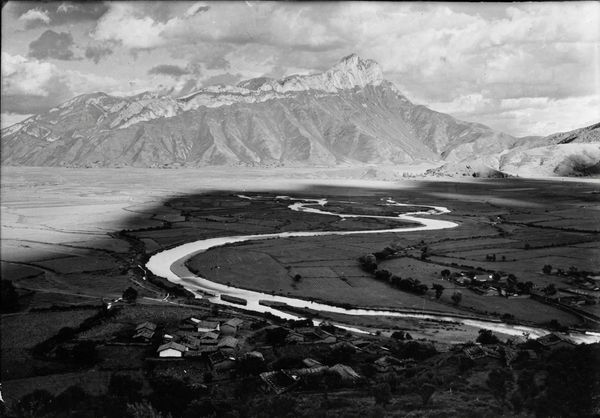
View of Mount Gemu from the Yongning plain
Looking across the Yongning plain to Mount Gemu, the Goddess Mountain (called “Gamu” by the Mosuo and known in Chinese as Lion Mountain). This is the sacred mountain the Mosuo worship every year on the 25th day of the 7th lunar month, and one of the very first photographs Rock took on arriving in Yongning in 1922.
© National Geographic/ Photo: Dr. Joseph F. Rock
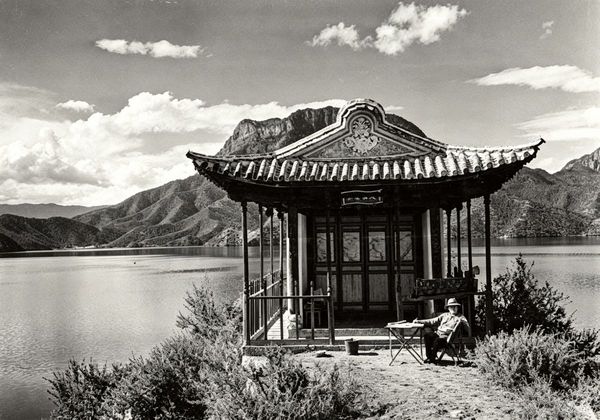
Rock in the waterside pavilion on Xieva E Island
In the civil war that swept Yunnan in 1929, the ferry across Lugu Lake to Yongning was destroyed by fighting and Rock was stranded on the island for months. In suit and tie he sits in the waterside pavilion of Ayunshan's summer villa, Xieva E Island (Nyorophu). It is the most classic portrait of Rock himself at Lugu Lake.
© National Geographic/ Photo: Rock's travelling photographer
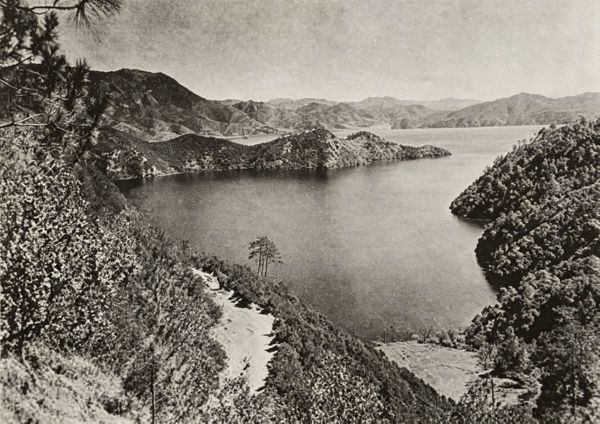
Panoramic view of Lugu Lake (1925)
Aerial view of Lugu Lake from the ridge of Houlong Mountain, the peninsula reaching into clear water. Published in National Geographic in April 1925 in the article “The Land of the Yellow-Hatted Lamas,” this was the first time Western readers saw Lugu Lake in a magazine.
© National Geographic/ Photo: Dr. Joseph F. Rock
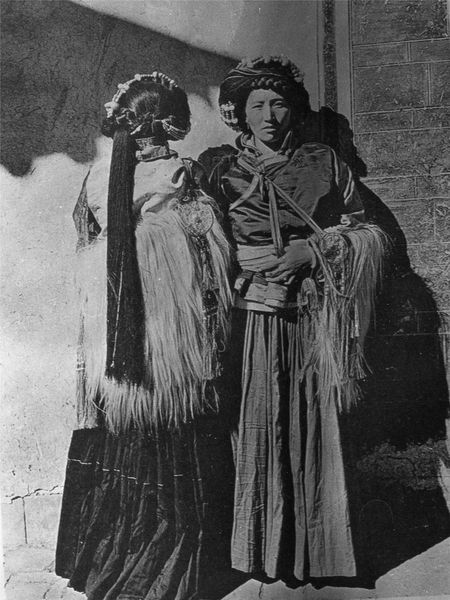
Mosuo women in festival dress at Yongning (1924)
In 1924 Rock ventured deep into the Yongning plain for the first time. Two Mosuo women stand side by side, jewelled crowns on their heads and sheepskin capes bearing round sun-and-moon emblems — the iconic “stars on the shoulders, moon on the back” dress of Naxi and Mosuo women.
© National Geographic/ Photo: Dr. Joseph F. Rock
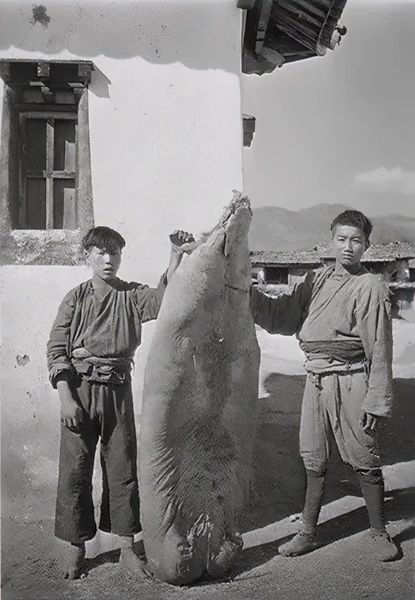
Mosuo boys carrying cured pig meat (1931)
Two young Mosuo boys carry together a huge whole pig cured the traditional way, known as Zhubiao meat or pipa meat. Mosuo curing preserves a whole pig: skinned, boned, salted and pressed into a pipa shape, it keeps for years. It is the most iconic image of Mosuo food culture.
© Harvard-Yenching Library/ Photo: Dr. Joseph F. Rock
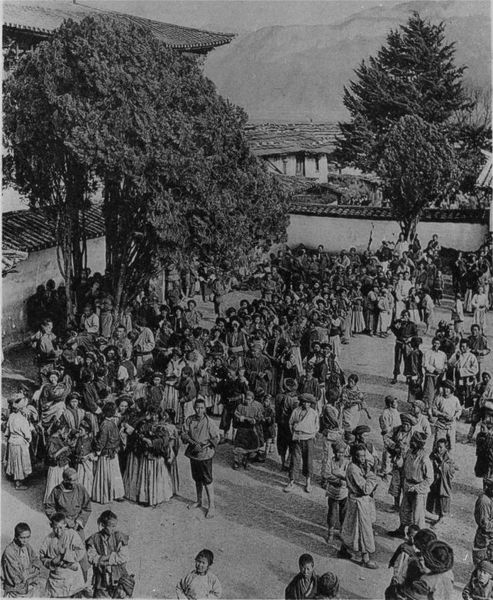
Mosuo market at Yongning (1924)
An overhead view in 1924: Mosuo crowds gather for market on the square before Zhami Monastery in Yongning. Mosuo women in bamboo hats and sheepskin crowd around — the busiest public place on the Yongning plain.
© National Geographic/ Photo: Dr. Joseph F. Rock
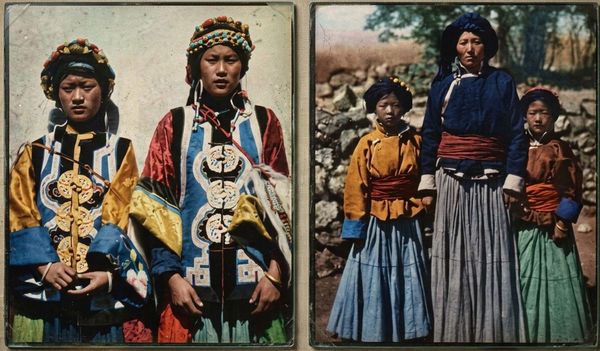
Young noble girls of Yongning, Autochrome colour
Two young noble girls of Yongning stand side by side in full ceremonial dress and ornate silver headdresses. Shot between 1928 and 1930 on Autochrome glass plates, this is among the earliest colour photographs ever made in Southwest China, with only a dozen or so surviving worldwide.
© XPM · Xie Zilong Photography Museum/ Photo: Dr. Joseph F. Rock
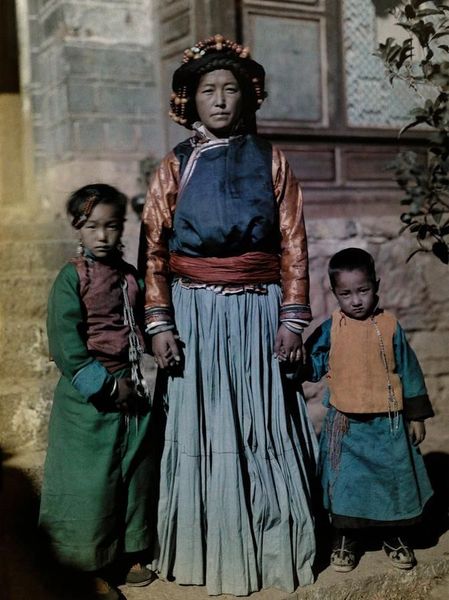
The chief's lady of Xieva E Island with two children (colour)
Ayunshan's wife — known to the Mosuo as the “Chief's Lady” — holds two children before the villa on Xieva E Island. She wears noble Mosuo dress; behind her rise the pillars and lattice windows of a Han-style pavilion.
© National Geographic/ Photo: Dr. Joseph F. Rock
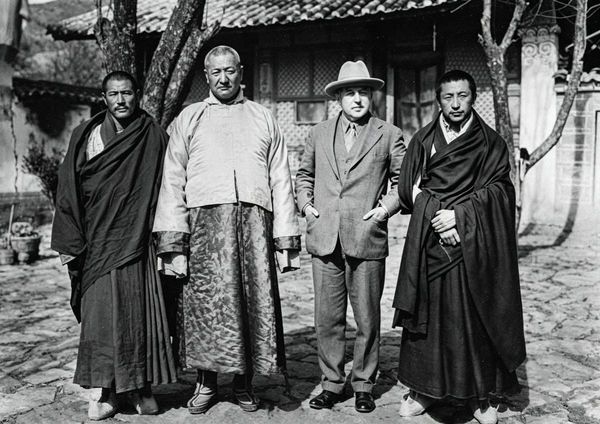
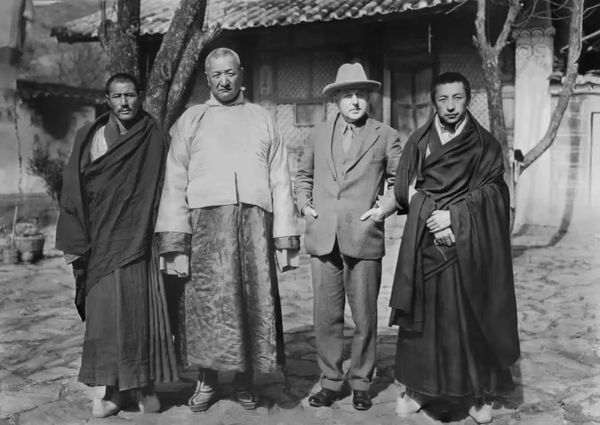
Rock with four Yongning nobles
Four men in a row: from left, a lama, Yongning chief Ayunshan, Rock in suit and hat, and another lama. Held by the Hunt Institute for Botanical Documentation at Carnegie Mellon University, it is the clearest surviving group portrait of Rock with the inner circle of the Yongning tusi.
© Carnegie Mellon University/ Photo: Rock's travelling photographer
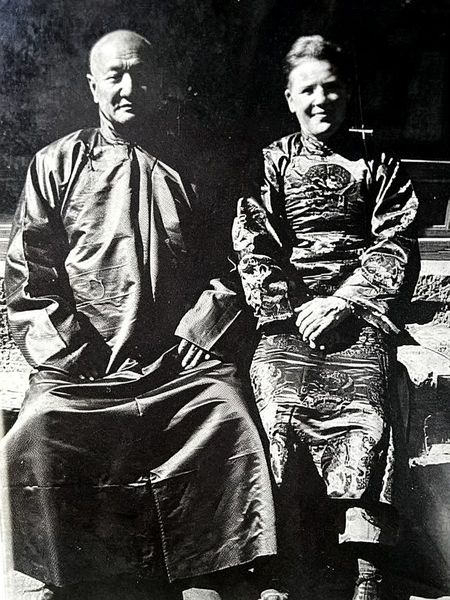
Two-shot of Ayunshan and Rock
Ayunshan in a silk robe and Rock in a brocade jacket sit side by side on the steps. It is the defining two-shot of Rock and Yongning chief Ayunshan — a friendship of more than ten years, between mentor and friend and across the generations.
© National Geographic/ Photo: Rock's travelling photographer
Spring Festival group of the Yongning tusi family (1929)
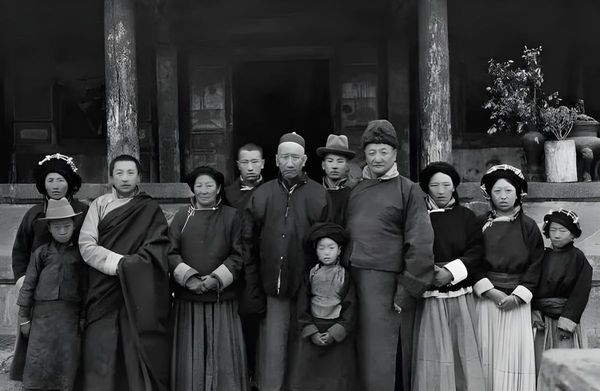
At the 1929 Spring Festival, more than ten members of Ayunshan's household pose before the steps of the yamen. The chief and his wife sit in the centre, ringed by children, daughters-in-law and grandchildren in their finest dress — the most complete family portrait of a Mosuo tusi family to survive.
© National Geographic/ Photo: Dr. Joseph F. Rock
Oracle dancer of Zhami Monastery (1930, colour)
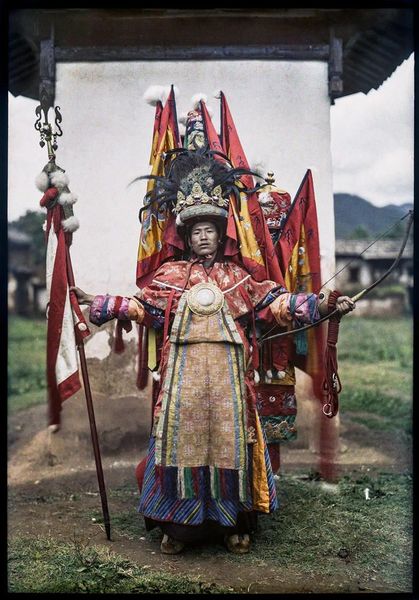
At the cham dance ritual of Yongning's Zhami Monastery in 1930, an oracle dancer wears an ornate five-Buddha crown and brocade vestments and holds a vajra. Shot on Autochrome colour film; the same ritual is still held at Zhami Monastery every year in the 10th lunar month.
© XPM · Xie Zilong Photography Museum/ Photo: Dr. Joseph F. Rock
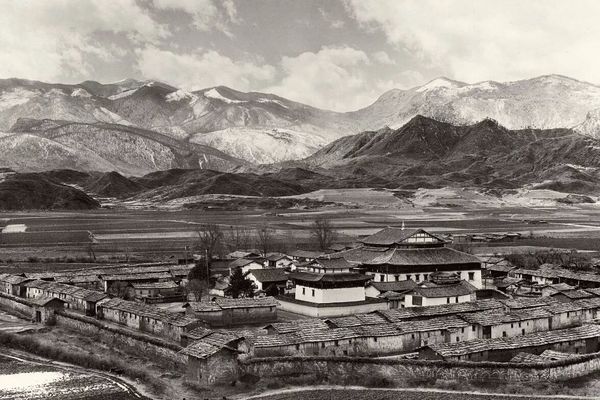
Panorama of Yongning's Zhami Monastery (1929)
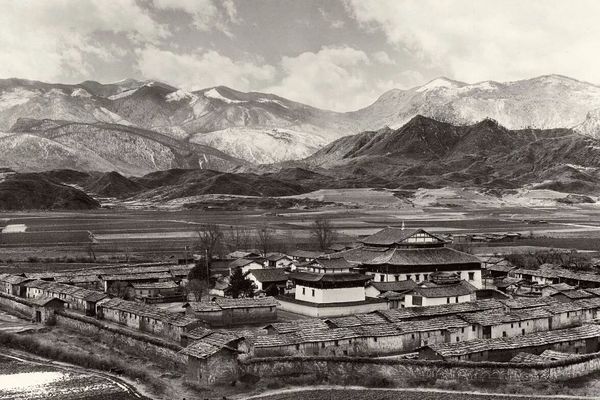
A 1929 panorama of Yongning's Zhami Monastery, a hillside complex of the Gelug school of Tibetan Buddhism with golden roofs and red walls. Rock photographed its rituals and monks here many times; today's Zhami Monastery was rebuilt on the same site.
© National Geographic/ Photo: Dr. Joseph F. Rock
Ayunshan holding his young son Luosang Yishi
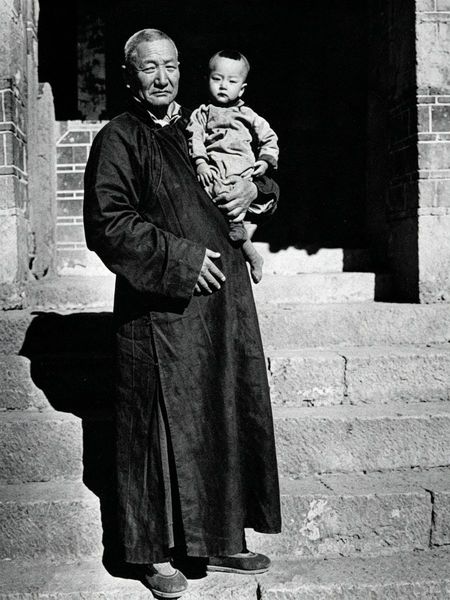
Ayunshan stands on the stone steps of the Xieva E Island villa, holding his infant son Luosang Yishi. The boy was later recognised as a living Buddha, the only reincarnated lama in Mosuo history; after Ayunshan died in 1933, Rock raised him to adulthood.
© National Geographic/ Photo: Dr. Joseph F. Rock
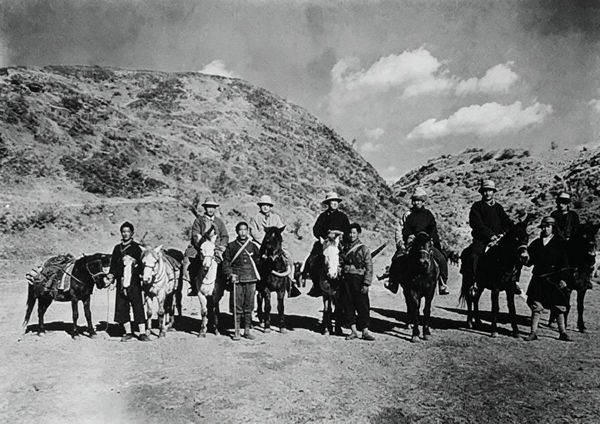
Farewell at Riyuehe
Farewell at Riyuehe
The mounted column pauses at Riyuehe, the ford where Kublai Khan camped on his southward campaign against Dali in 1253. Every time Rock left Lugu Lake, Ayunshan saw him off here. Second from right is Ayunshan; fifth from right is Rock.
© National Geographic/ Photo: Rock's travelling photographer
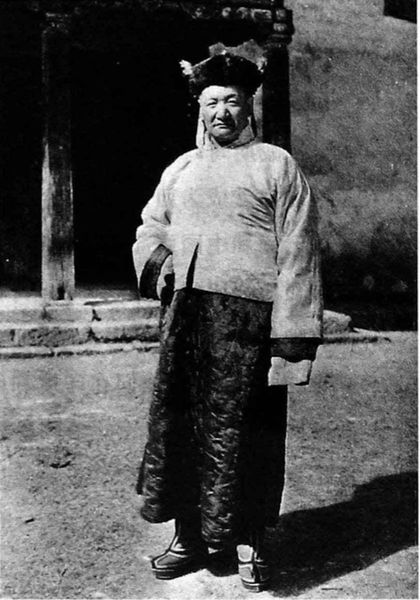
Standing portrait of Yongning chief Ayunshan
Ayunshan in a Han-style silk robe and fox-fur hat stands with his hands behind his back before the yamen steps. In his diary Rock called him “my best friend in China.” When Ayunshan died in 1933, Rock broke down in tears in his journal.
© National Geographic/ Photo: Dr. Joseph F. Rock
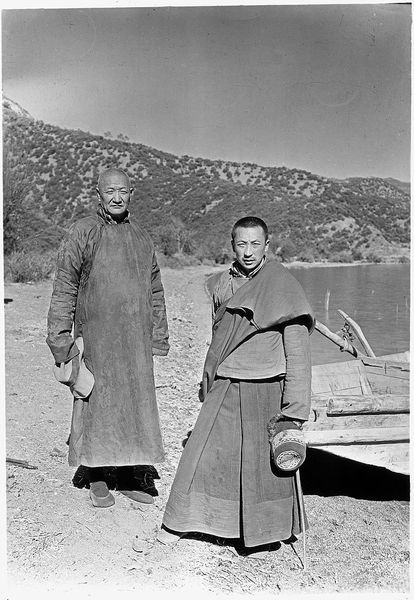
Ayunshan and a young lama by Lugu Lake (1929)
On the left Yongning chief Ayunshan (silk robe, small cap, hat tucked under his arm); on the right a young lama in red robes holding a prayer wheel. They stand by a wooden boat on the shore of Lugu Lake against the wooded slope. Original from the Library of Congress, LOT 13971.
© Library of Congress/ Photo: Dr. Joseph F. Rock
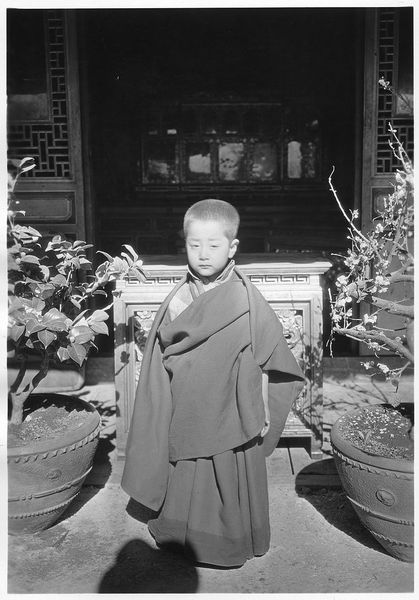
The child living Buddha Lu-zo
Ayunshan's young son Luosang Yishi (Lu-zo), newly recognised as a living Buddha, photographed before carved wooden furnishings in the Yongning yamen. He wears a small monk's robe; large earthenware pots of flowering shrubs stand on either side and a carved screen behind.
© Library of Congress/ Photo: Dr. Joseph F. Rock

02 /

Yuhu Village, Lijiang

Rock made Yuhu Village (Xuesong) near Lijiang his base in China for nearly a decade. In this stone house he studied the Naxi pictographic script, collected eight thousand dongba scriptures, and wrote The Ancient Na-khi Kingdom of Southwest China.
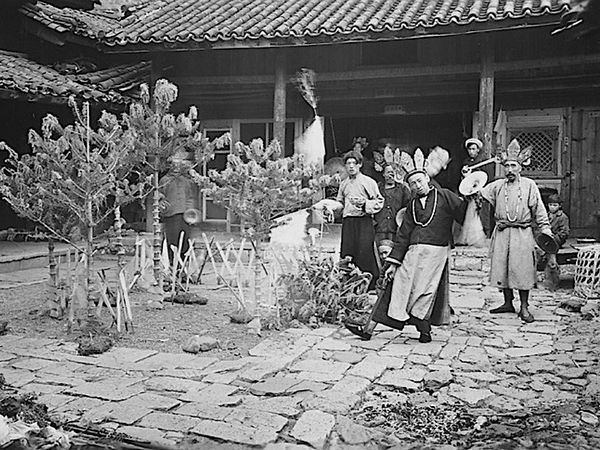
Naxi dongba spirit dance at Yuhu Village
A Naxi dongba priest performs a spirit dance in the courtyard of Yuhu Village (which Rock called Wuluke / Wolken), hand drum and bell in hand. Yuhu Village was Rock's Lijiang base from 1923 onward.
© National Geographic/ Photo: Dr. Joseph F. Rock
Rock's study at Yuhu Village (1927-29)
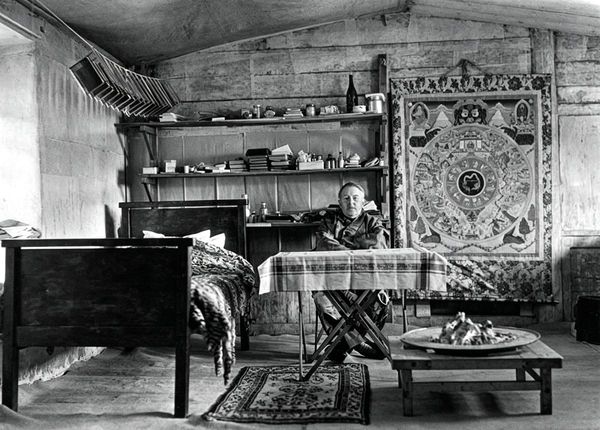
Rock sits at a folding table in the stone house at Yuhu Village, shelves behind him packed with books and specimens and a thangka on the wall. He lived here for nearly ten years, completing his major work on Naxi studies and collecting eight thousand dongba scriptures.
© National Geographic/ Photo: Rock's travelling photographer
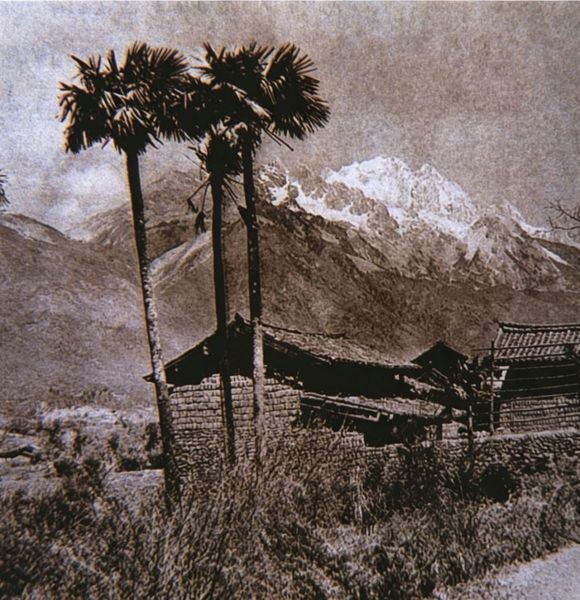
Palm tree and Jade Dragon Snow Mountain at Yuhu Village (1925)
Yuhu Village in 1925: a palm tree rises before an adobe-and-stone house, with the snow-capped Jade Dragon Snow Mountain behind. It is one of Rock's finest Lijiang landscapes.
© National Geographic/ Photo: Dr. Joseph F. Rock
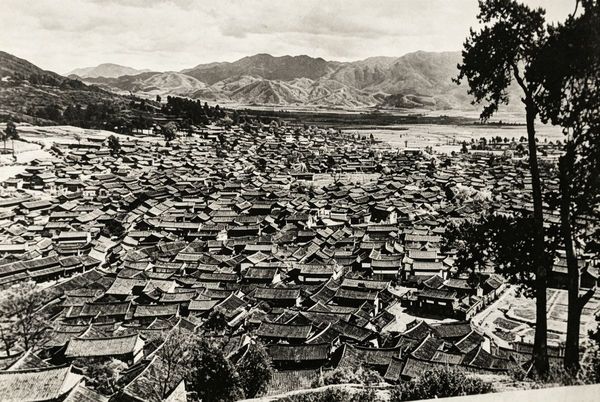
Panorama of old Lijiang
Overlooking the old town of Lijiang from Lion Hill (Wangu Pavilion): black-tiled roofs crowd down to the foot of the slope, the Jade Dragon Snow Mountain spanning the horizon beyond.
© National Geographic/ Photo: Dr. Joseph F. Rock
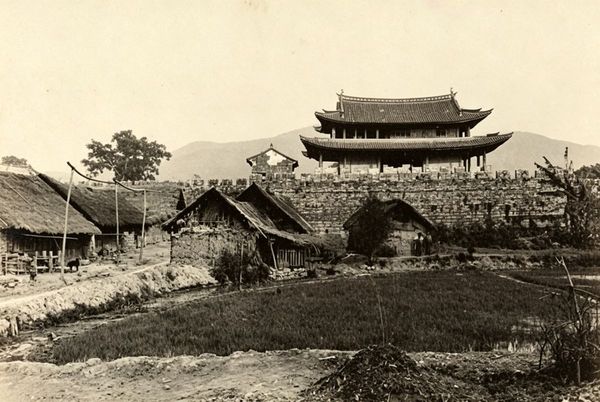
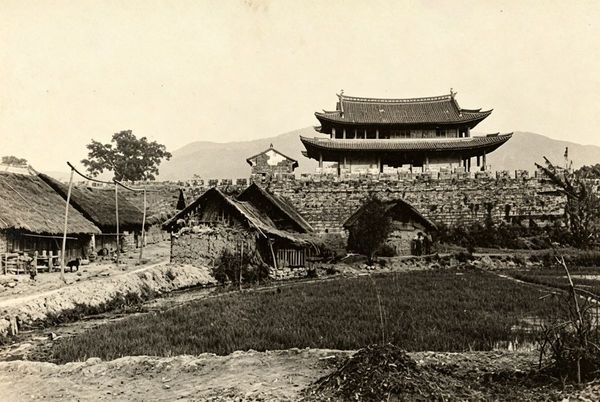
The gate of Lijiang
The gate of Lijiang
The gate tower of old Lijiang, earthen walls and thatched huts in the foreground. This gate no longer stands; the photograph is an important record of Lijiang's urban history.
© National Geographic/ Photo: Dr. Joseph F. Rock
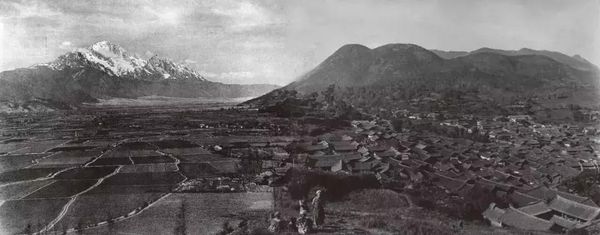
The Lijiang plain and Jade Dragon Snow Mountain
Looking down on the Lijiang basin, its fields in a checked pattern, the Jade Dragon Snow Mountain lined up along the northern skyline.
© National Geographic/ Photo: Dr. Joseph F. Rock
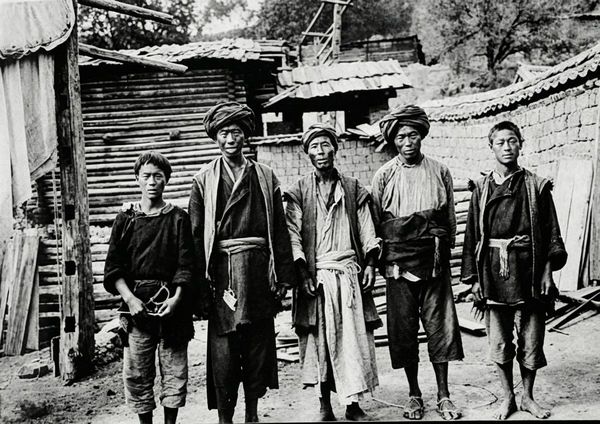
Five Naxi men in a group portrait
Five Naxi men in traditional hemp short coats stand before a wooden fence house. They were Rock's hired hands and guides at Yuhu Village.
© National Geographic/ Photo: Dr. Joseph F. Rock
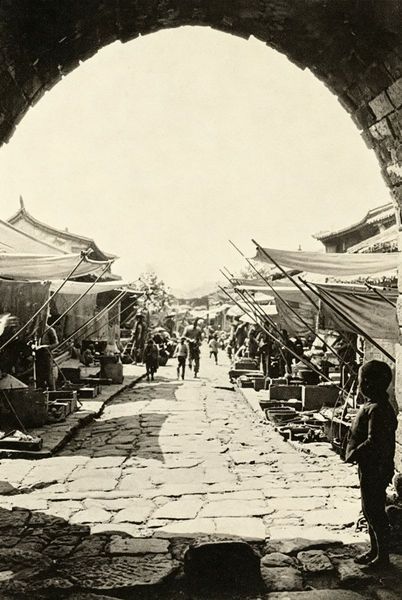
Market through the Lijiang gate arch
Looking out through the gate arch: market stalls line the stone street, Naxi vendors and passersby threading between them. The liveliest street-scene image of 1920s old Lijiang.
© National Geographic/ Photo: Dr. Joseph F. Rock
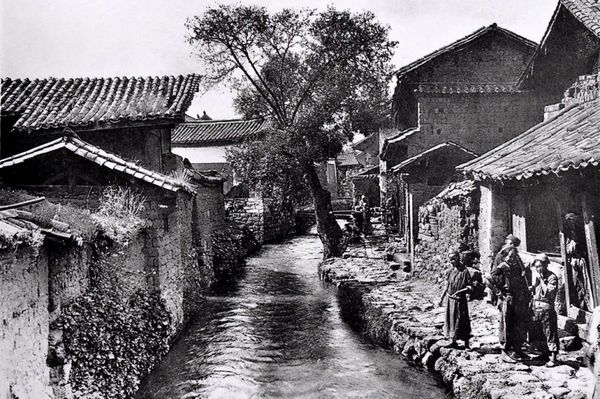
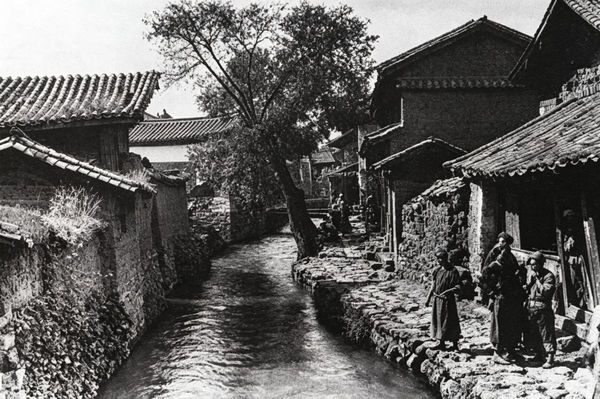
The waterway of old Lijiang
The water system of old Lijiang — one of its three rivers and nine streets — flanked by Naxi houses and weeping willows. Rock recorded the original look of Lijiang, where “every household has running water.”
© National Geographic/ Photo: Dr. Joseph F. Rock
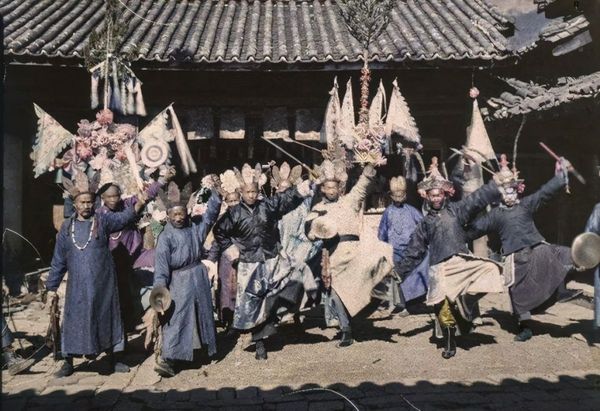
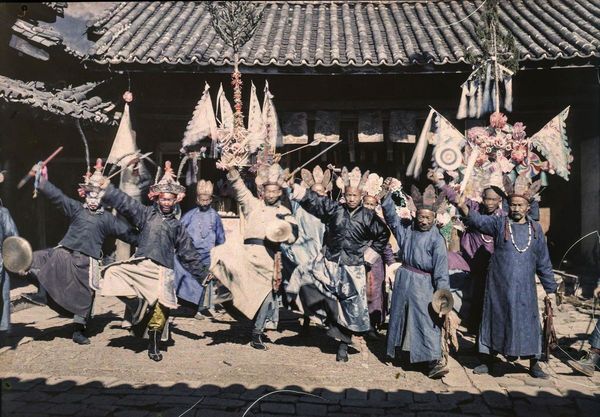
Naxi dongba wind-propitiation rite (1930, colour)
The Naxi dongba “wind propitiation” ceremony (Halariken) of 1930, shot in Autochrome colour. Before the altar, dongba priests recite dongba scriptures to guide the spirits of the unhoused dead.
© XPM · Xie Zilong Photography Museum/ Photo: Dr. Joseph F. Rock
Naxi sacrificial ceremony in progress (colour)
A Naxi sacrificial ceremony in full swing: dongba priests in vestments form a line, hand bells and ritual staffs in hand. Autochrome glass plate from the collection of the XPM · Xie Zilong Photography Museum.
© XPM · Xie Zilong Photography Museum/ Photo: Dr. Joseph F. Rock
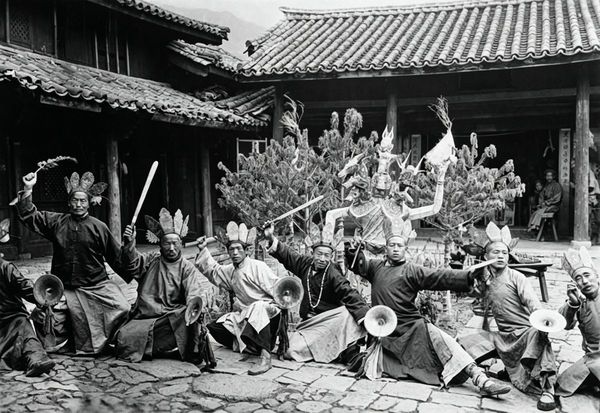
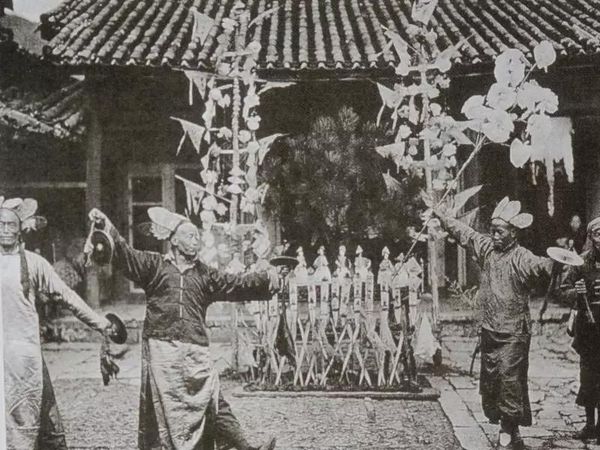
Duo-ghost exorcism rite (1923-24)
In 1923–24 several Naxi dongba perform the Duo-ghost exorcism for averting misfortune in a Yuhu Village courtyard, line after line of them in ritual gesture with sacred implements. Held by the Harvard-Yenching Library.
© Harvard-Yenching Library/ Photo: Dr. Joseph F. Rock
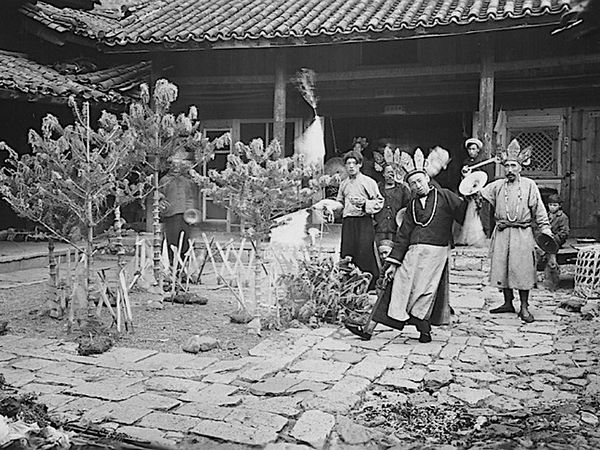
Dongba dance in a Yuhu Village courtyard
In a Yuhu Village courtyard, a Naxi dongba performs the spirit dance, villagers seated around to watch. It was the scene Rock photographed most often from his Lijiang base.
© National Geographic/ Photo: Dr. Joseph F. Rock
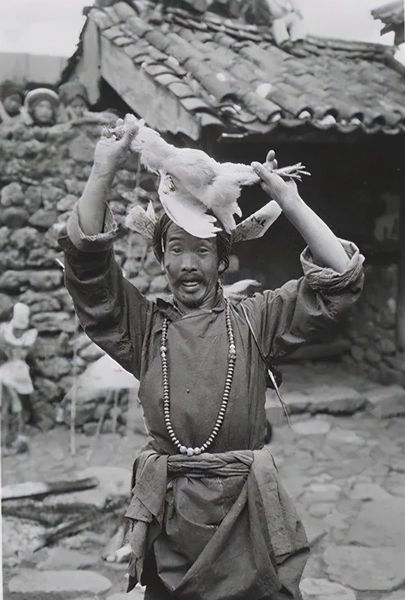
Naxi dongba raising a rooster in ritual
A Naxi dongba, full-length, raises a rooster high in a rite. It is a moment of the Naxi dongba exorcism, meant to drive out evil spirits.
© National Geographic/ Photo: Dr. Joseph F. Rock
The great Halariken wind-propitiation rite
The great Halariken wind-propitiation rite: sacred trees and tablets stand in rows, dongba priests in vestments recite the dongba scriptures. It is one of the most solemn ceremonies of the Naxi.
© National Geographic/ Photo: Dr. Joseph F. Rock
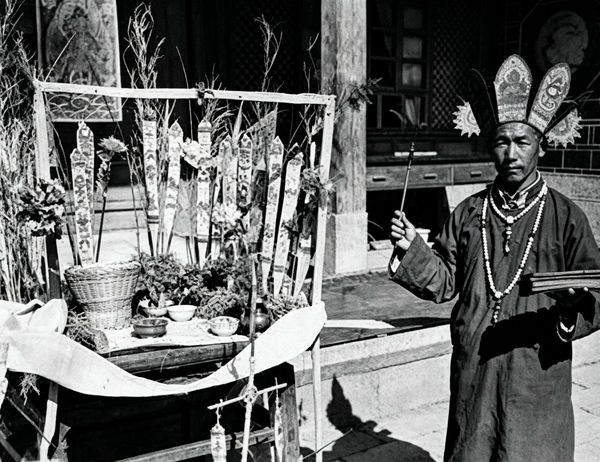
Naxi priest with the altar (1925)
In 1925 a Naxi dongba wears the five-Buddha crown; beside him the altar is laid with dough figures, butter offerings and pine branches. Rock shot many such ritual close-ups while studying dongba religion.
© National Geographic/ Photo: Dr. Joseph F. Rock
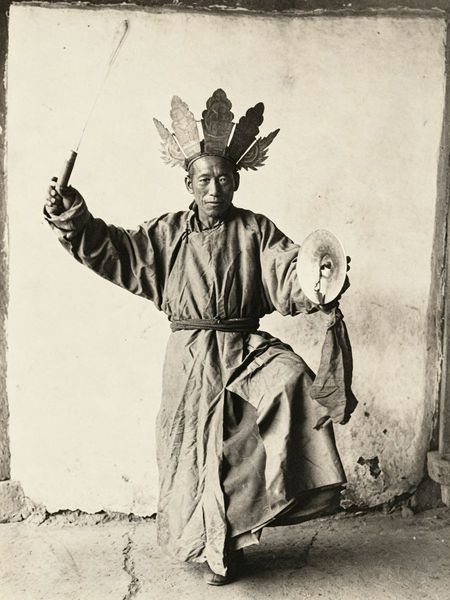
Mosuo male shaman's spirit dance (1922)
At Xuesong Village in 1922, a Mosuo male shaman wears a spirit crown, sword in one hand and drum in the other, leaping on one leg in ritual dance. It was among the first local religious images Rock took soon after arriving in Lijiang.
© National Geographic/ Photo: Dr. Joseph F. Rock
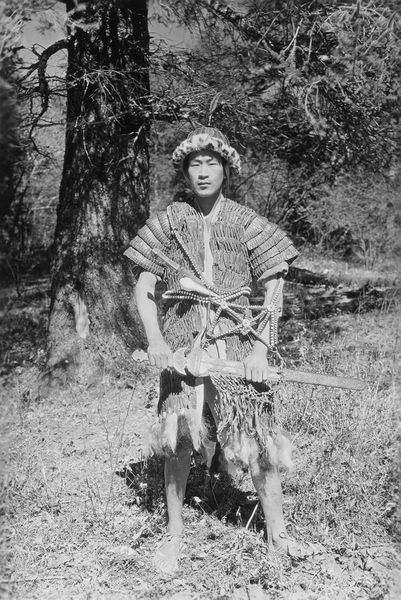
Mosuo warrior in leather armour (1929)
Beneath the Jade Dragon Snow Mountain, a Mosuo warrior stands in traditional “wusuo” leather armour, long blade in hand. An extremely rare image of Mosuo arms — no example of this leather armour survives today. Held by the Harvard-Yenching Library.
© Harvard-Yenching Library/ Photo: Dr. Joseph F. Rock
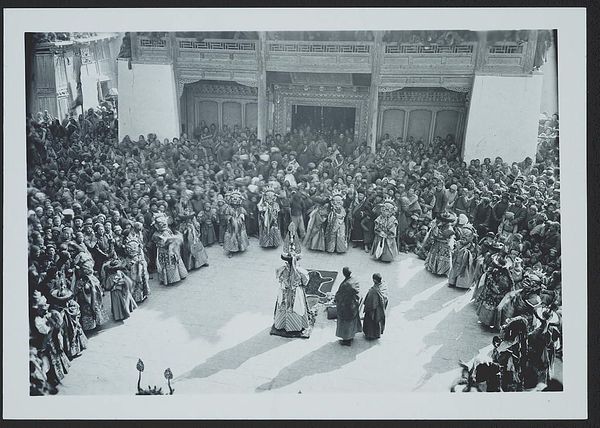
The Cham-ngyon-wa spirit dance
A cham dance in the monastery courtyard: masked dancers in the centre perform in line while monks and lay spectators stand tier upon tier around. The overhead angle shows the painted beams of the Han-style main hall clearly.
© Library of Congress/ Photo: Dr. Joseph F. Rock
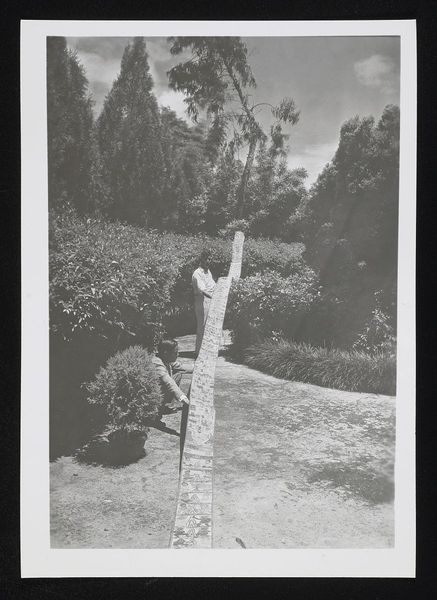
Naxi dongba unrolling a hand-painted scroll
On a garden path outdoors, two Naxi men unroll a several-metre-long hand-painted dongba scroll filled with the Sacred Road diagram. It is a documentary image from Rock's collecting of dongba scriptures.
© Library of Congress/ Photo: Dr. Joseph F. Rock
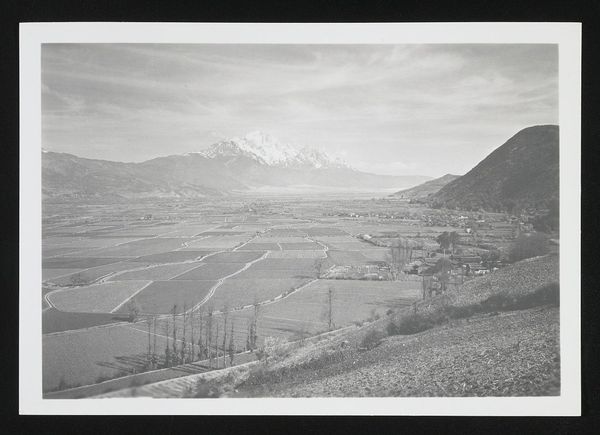
The Lijiang plain and Jade Dragon Snow Mountain from Elephant Hill (1)
From Elephant Hill in Lijiang, the Lijiang plain is divided into a chessboard of neat fields; the main peak of the Jade Dragon Snow Mountain shows through the clouds beyond.
© Library of Congress/ Photo: Dr. Joseph F. Rock
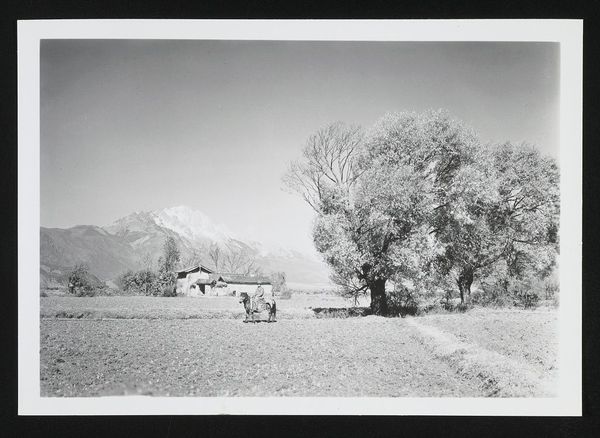
Lijiang fields and snow mountains from Elephant Hill (2)
The Lijiang countryside: a huge wild plum tree stands at the edge of the fields, a farmer rides a donkey along a path, farmhouses half hidden, the Jade Dragon Snow Mountain behind.
© Library of Congress/ Photo: Dr. Joseph F. Rock
Rock's handwritten negative label
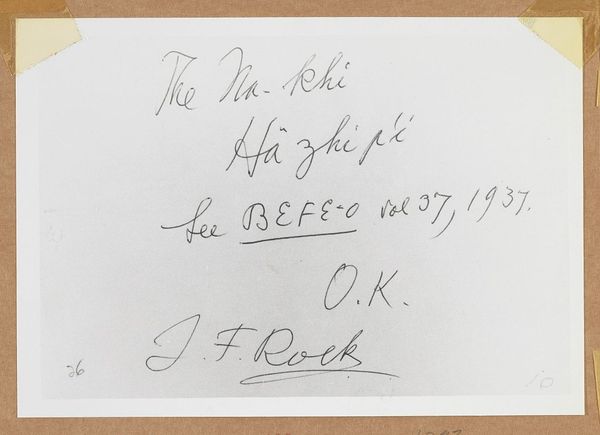
Not a ritual scene at all, but Rock's own handwriting on a negative envelope: “The Na-khi Ha-zhi-pi, See BEFE-o vol 37, 1937. OK. J.F.Rock” (the Naxi Ha-zhi-pi rite, see Bureau of American Ethnology vol. 37, 1937). Number 26 at lower left and 10 at lower right — Rock's original negative-archive cataloguing.
© Library of Congress/ Photo: Dr. Joseph F. Rock

03 /

Muli

The “kingdom of lamas” Rock wrote of — Muli. Once a closed realm no outsider could enter, it received him through Chote Chaba, the Muli King, and led Rock to the three sacred peaks of Daocheng Yading.
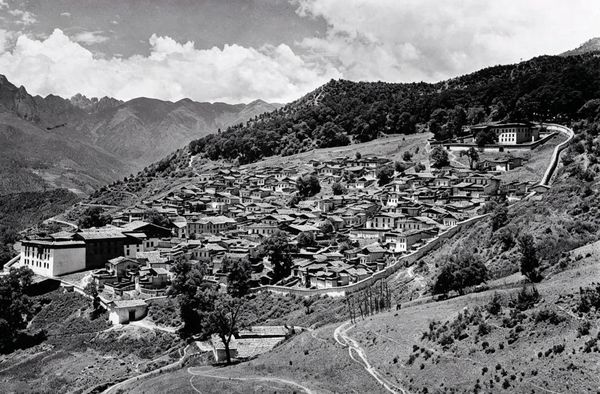
Panorama of Muli Monastery (1928)
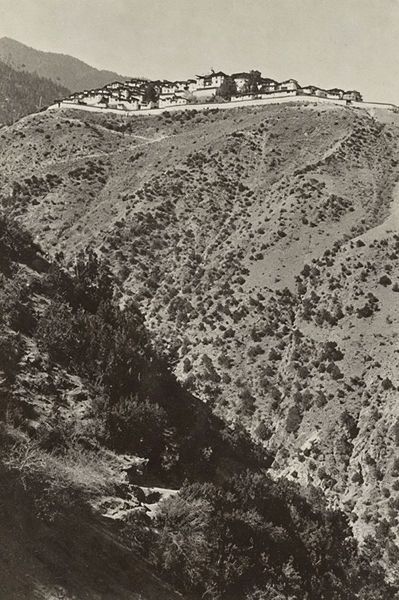
A 1928 panorama of Muli Monastery, the religious and political centre of the “kingdom of lamas” Rock described. Golden roofs and red walls climb the slope; the official residence of Muli King Chote Chaba stood within. The monastery was destroyed in 1967.
© National Geographic/ Photo: Dr. Joseph F. Rock
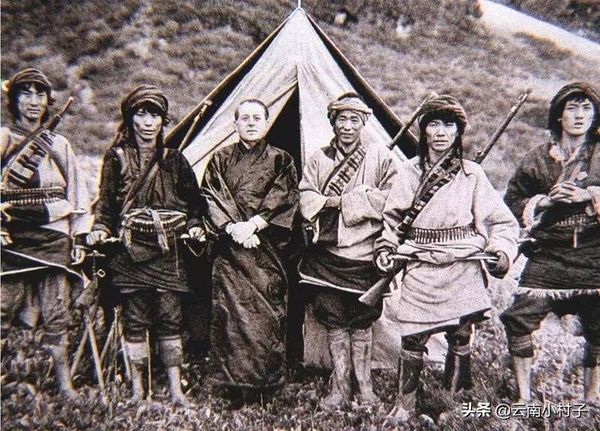
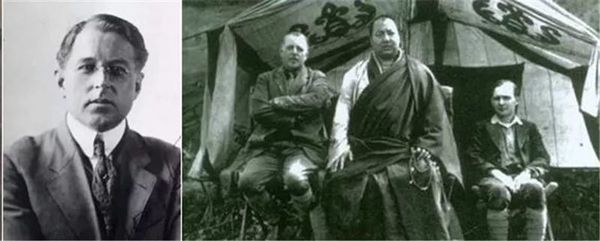
Rock with Muli King Chote Chaba
Rock poses before a tent with Muli King Chote Chaba and his retinue. The Muli King was the religious and political head of the most closed kingdom in Southwest China; his unusual reception of Rock opened the way into Daocheng Yading.
© National Geographic/ Photo: Rock's travelling photographer
Muli lamas and officials (1924)
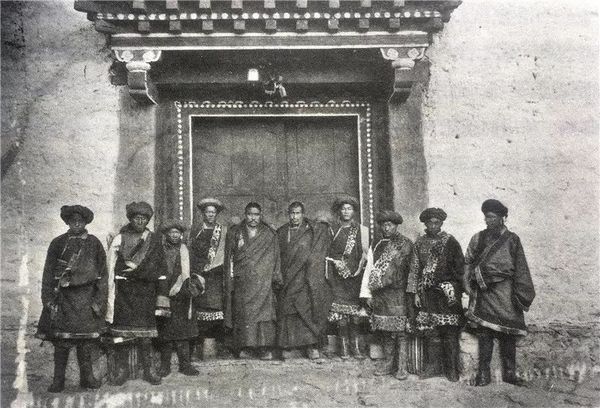
Inside Muli Monastery in 1924, several lamas and lay officials sit in a row in red-and-yellow robes and silk official dress.
© National Geographic/ Photo: Dr. Joseph F. Rock
Rock on horseback in Tibetan dress
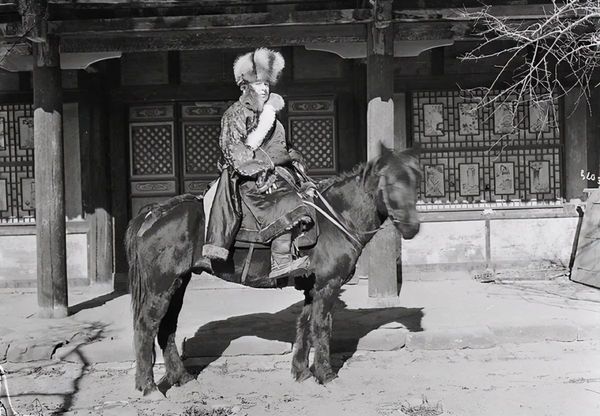
Rock in a Tibetan robe and wide-brimmed hat, on horseback in the Muli region. It is his classic look on journeys deep into the Tibetan borderlands.
© National Geographic/ Photo: Rock's travelling photographer
The Muli Living Buddha on horseback at 18
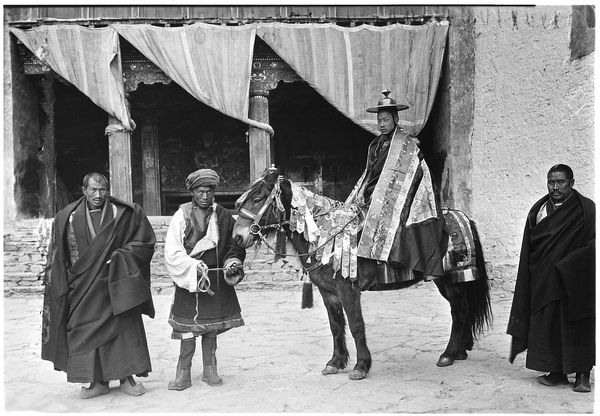
The young Muli Living Buddha (Muli Khutughtu), at eighteen, on an elaborately caparisoned horse, wearing the yellow pointed hat of the Gelug school. Three monk attendants stand on either side; eaves and banners of Muli Monastery behind.
© Library of Congress/ Photo: Dr. Joseph F. Rock
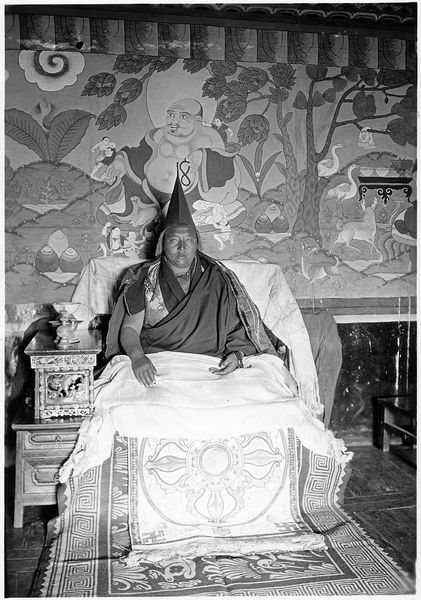
Muli King Chote Chaba seated in monk's robes
Muli King Chote Chaba wears the yellow pointed hat and sits on the throne in monk's robes; behind him a whole wall of Maitreya murals (trees, white elephants, deer, auspicious motifs). It is the portrait Rock took when they first met in 1928.
© Library of Congress/ Photo: Dr. Joseph F. Rock

04 /

Daocheng Yading

In 1928 Rock crossed from Muli into Daocheng Yading and photographed the three sacred peaks — Yangmaiyong, Xiannairi and Xianuoduoji. Published in National Geographic, these images later inspired James Hilton's Lost Horizon.
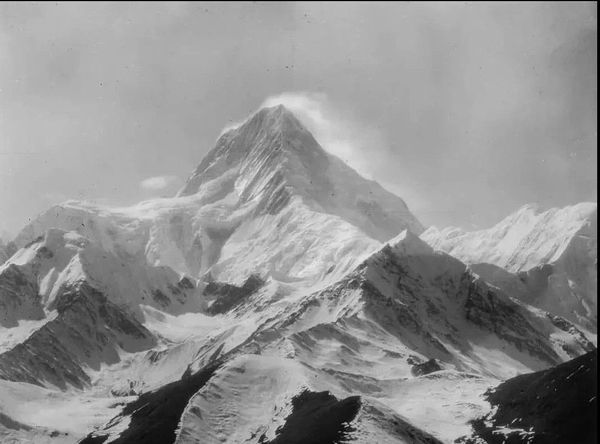
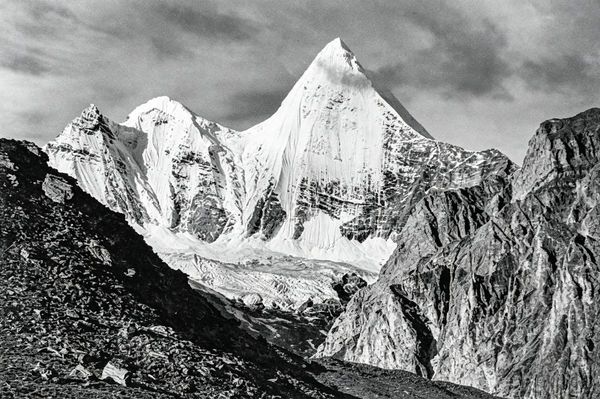
Yangmaiyong and Xiannairi
Two of Yading's three sacred peaks: Yangmaiyong, incarnation of Manjushri, and Xiannairi, incarnation of Avalokiteshvara, their snow summits facing each other. Rock took these on foot when he entered Yading from Muli in 1928.
© National Geographic/ Photo: Dr. Joseph F. Rock
The sacred peak Yangmaiyong (1928)
In 1928 the pyramid peak of Yangmaiyong thrusts straight into the sky. Rock wrote in his journal: “Never in my life have I seen such a magnificent peak; it must captivate everyone who beholds it.”
© National Geographic/ Photo: Dr. Joseph F. Rock
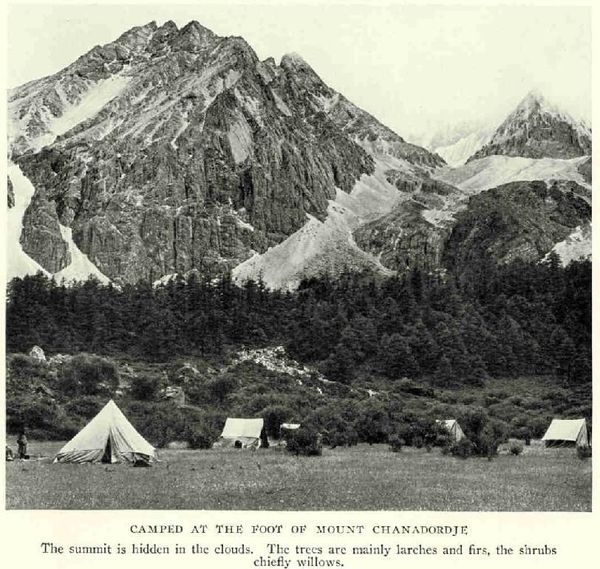
Camp beneath Xianuoduoji
Beneath Xianuoduoji, incarnation of Vajrapani, stands the tent camp of Rock's expedition. Camping below the snow peaks was the standard way Rock travelled.
© National Geographic/ Photo: Dr. Joseph F. Rock
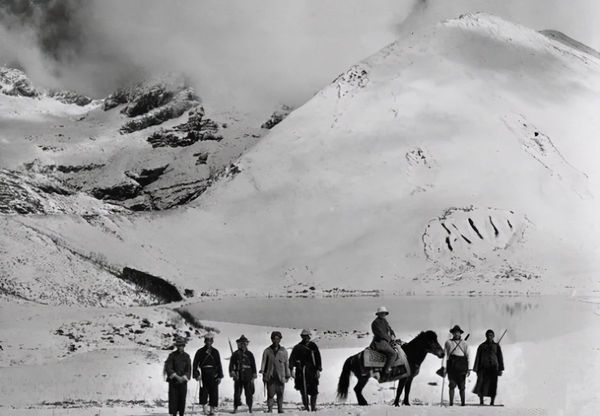
Rock leads his expedition into Yading (1928)
In 1928 Rock rides into Daocheng Yading at the head of his column. This outfit — Naxi guards, Tibetan porters and muleteers — was his standard configuration for the deep Hengduan Mountains.
© National Geographic/ Photo: Rock's travelling photographer
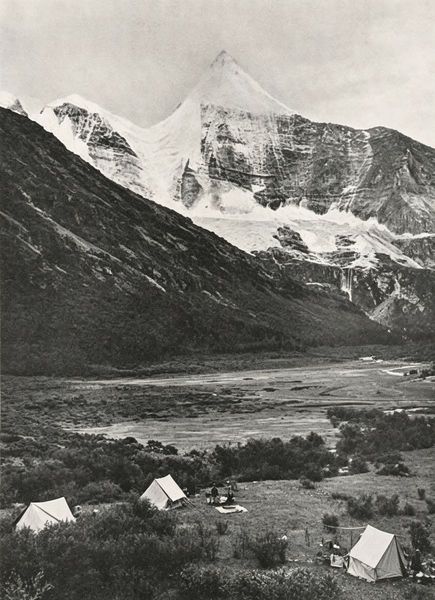
Camp below the Yading snow peaks
Tents scattered in the camp below the snow peaks, the summits stretching across the background. These photographs were later published in National Geographic and gave birth to the “Rock Line,” today's classic trekking route.
© National Geographic/ Photo: Dr. Joseph F. Rock

05 /

Zhoni, Gannan

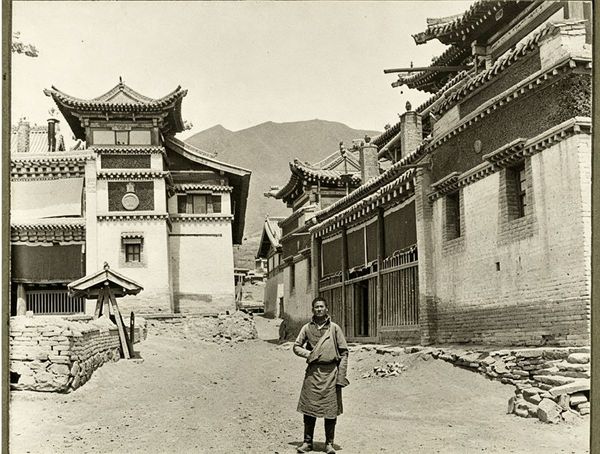
From 1925 to 1927 Rock used Zhoni as his base to explore the Tibetan Plateau. The Zhoni tusi Yang Jiqing was his warmest host, opening the doors of Chanding Monastery and the Zhoni edition of the Tibetan canon to him.
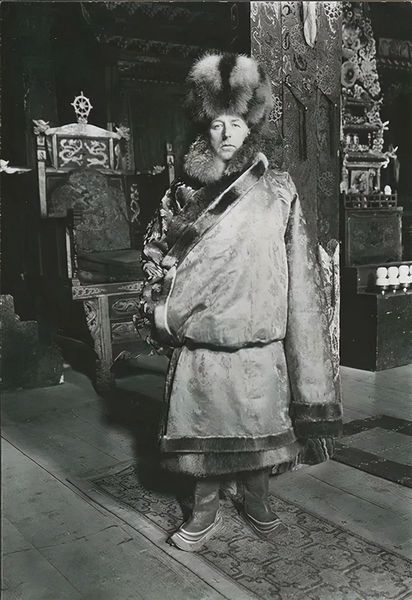
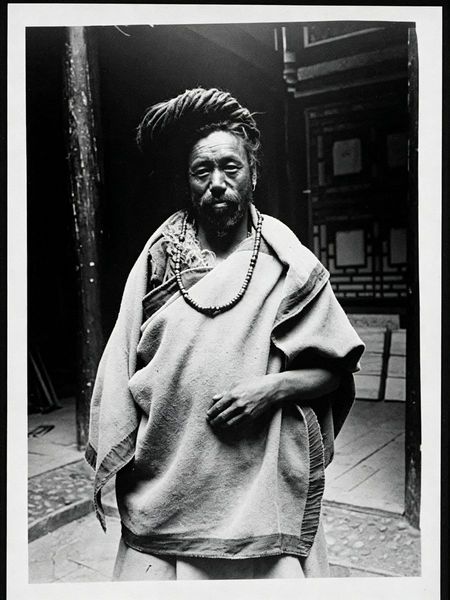
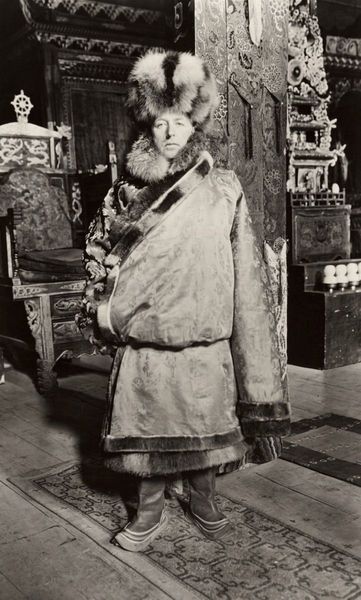
Rock at Chanding Monastery, Zhoni
From 1925 to 1927, Rock stands inside Chanding Monastery at Zhoni in Tibetan winter dress and a fox-fur hat. He based himself at Zhoni for two years while exploring the Tibetan Plateau; dressing as a Tibetan is his most legendary image.
© National Geographic/ Photo: Dr. Joseph F. Rock
A Tibetan man of Zhoni
A Tibetan man of Zhoni in a coarse felt cloak and fur hat, standing before a Tibetan-style door. Such felt cloaks were the standard winter dress of the Amdo Tibetan region.
© National Geographic/ Photo: Dr. Joseph F. Rock
Butter-sculpture festival at Chanding Monastery, Zhoni
The butter-sculpture festival at Chanding Monastery in the first lunar month: monks display elaborate butter offerings behind glass cases. This art is still practised in Gannan's monasteries.
© National Geographic/ Photo: Dr. Joseph F. Rock
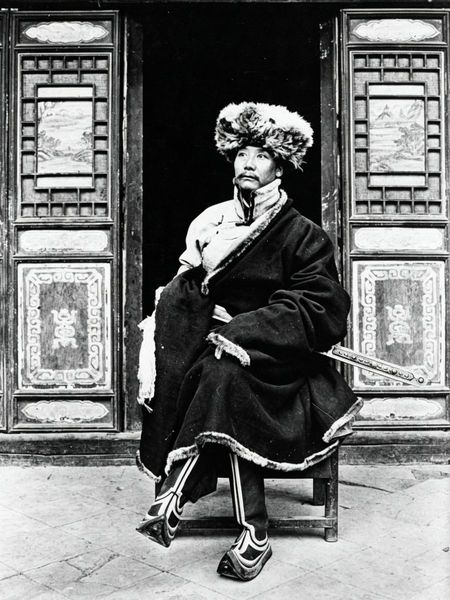
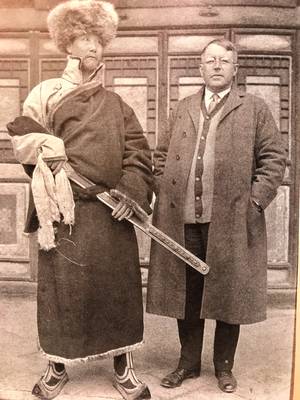
Yang Jiqing, tusi of Zhoni
Yang Jiqing, the 19th Zhoni Gyalpo, sits at the yamen gate in a fox-fur hat and otter-fur-trimmed robe, a Tibetan knife in hand. He was Rock's closest host during the two years in Gannan, opening Chanding Monastery and the Zhoni edition of the canon to him. In 1937 Yang Jiqing was killed in the Gannan incident by Lu Dachang's troops.
© National Geographic/ Photo: Dr. Joseph F. Rock
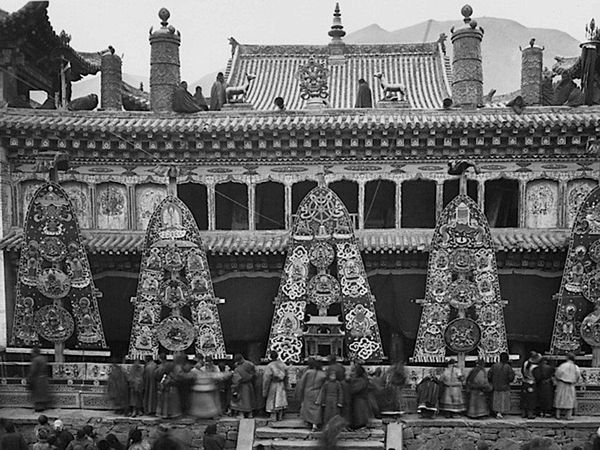
Panorama of Baishiya Monastery, Zhoni (1925)
May 1925, at Wanmao in Zhoni: a panorama of Baishiya Monastery (Gadan Xiezhulin), climbing the hillside.
© National Geographic/ Photo: Dr. Joseph F. Rock
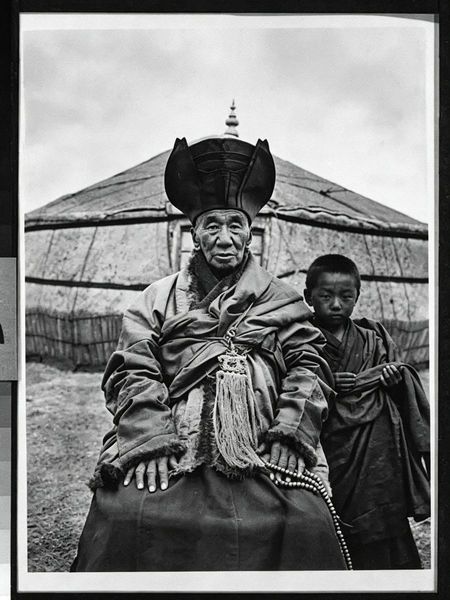
An old lama and a young novice
An old lama in a pointed hat and a young novice stand before a yurt, the open grassland of the Tibetan Plateau behind.
© National Geographic/ Photo: Dr. Joseph F. Rock
Tibetan boy in festival dress at Zhoni (1926)
On 28 February 1926 at the Yang tusi mansion in Zhoni, a Tibetan boy in full dress stands before the main hall, covered in silver necklaces and chest ornaments.
© National Geographic/ Photo: Dr. Joseph F. Rock

06 /

Portraits & the Road

From the border town of Puer to the heart of the Tibetan Plateau, Rock recorded along the way the lamas, local officials, mountains and rivers of the borderlands. These frames form the visual journal of his twenty-seven years in the Southwest.
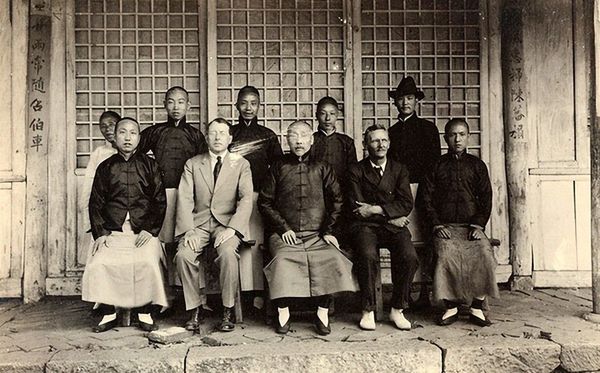
Group at the Puer prefectural yamen (1922)
In February 1922 Rock entered China through Haiphong in Vietnam and headed north along the Red River, posing with local officials at the yamen of Puer prefecture (today's Ning'er). It is the starting point of his twenty-seven years in China.
© National Geographic/ Photo: Dr. Joseph F. Rock
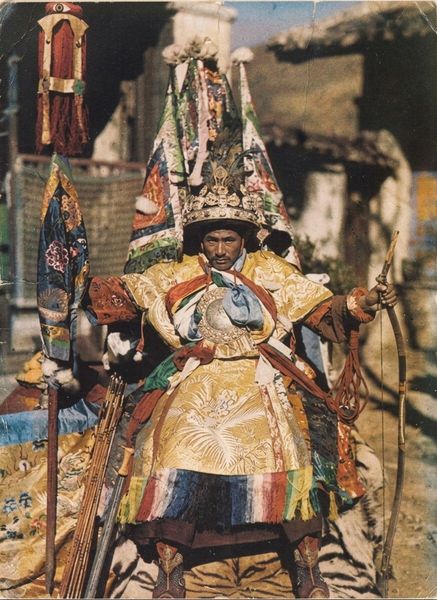
A Tibetan oracle (1935, colour)
A Tibetan oracle (shaman) of 1935 in ornate brocade vestments, bow and ritual implement in hand, shot on Autochrome colour film.
© XPM · Xie Zilong Photography Museum/ Photo: Dr. Joseph F. Rock
A Tibetan monk reading scriptures by the river
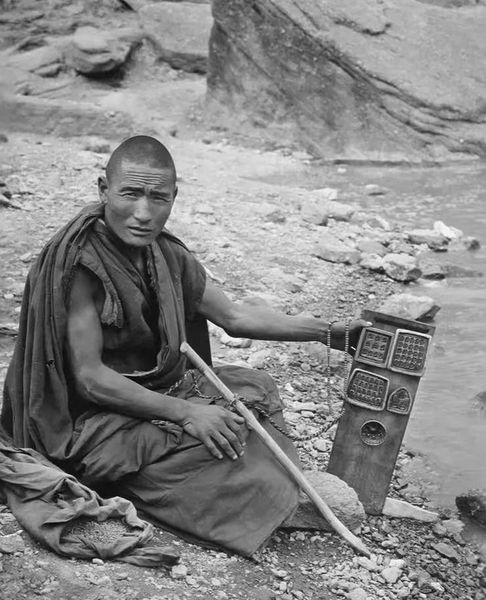
A red-robed Tibetan monk sits alone on a stone by the river, scripture in hand, the rushing water beside him. Rock took such quiet monastic images many times on the Tibetan Plateau.
© National Geographic/ Photo: Dr. Joseph F. Rock
Three Tibetan women
Three Tibetan women
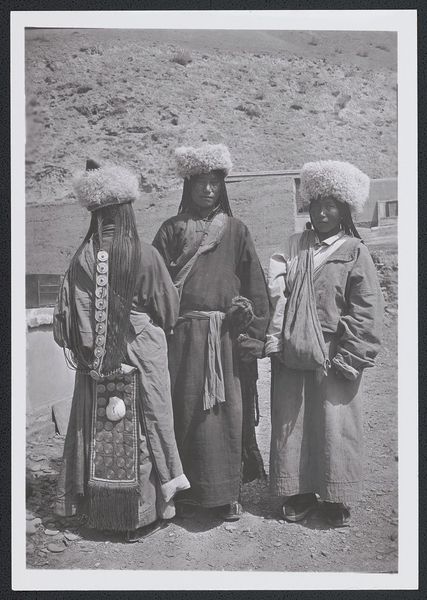
Three Tibetan women stand before an adobe house: the two on the sides wear round white sheepskin hats, the centre one with braids falling to her chest. The woman on the left shows, at her back, braid ornaments covered in silver coins and bone beads (“Gaisang”).
© Library of Congress/ Photo: Dr. Joseph F. Rock
A living Buddha with his disciples
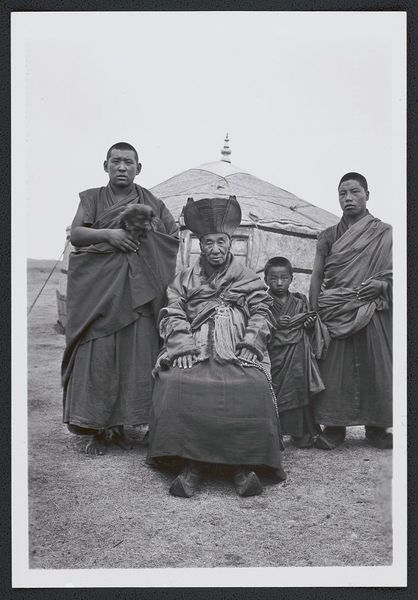
An old living Buddha in a pointed hat sits before a yurt, a young monk on each side and a small novice in the middle. All four wear neat crimson robes.
© Library of Congress/ Photo: Dr. Joseph F. Rock
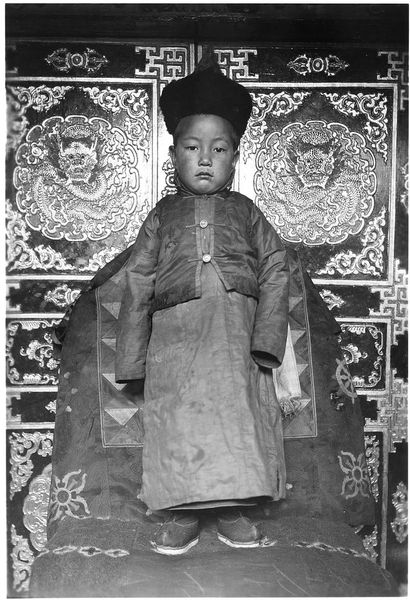
The child living Buddha
A young living Buddha in a satin jacket and black velvet hat stands before a gilt, dragon-carved screen. His expression is calm beyond his years.
© Library of Congress/ Photo: Dr. Joseph F. Rock
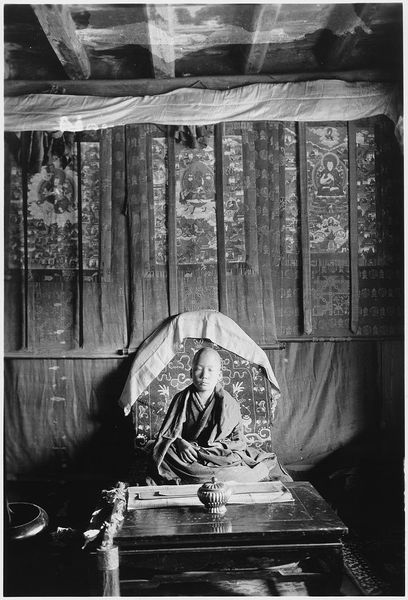
A young lama seated in the prayer hall
A young lama sits cross-legged on the altar throne of the prayer hall, a whole row of painted thangkas behind him (Buddhas, yidams and protectors), offerings laid on the small table before him.
© Library of Congress/ Photo: Dr. Joseph F. Rock
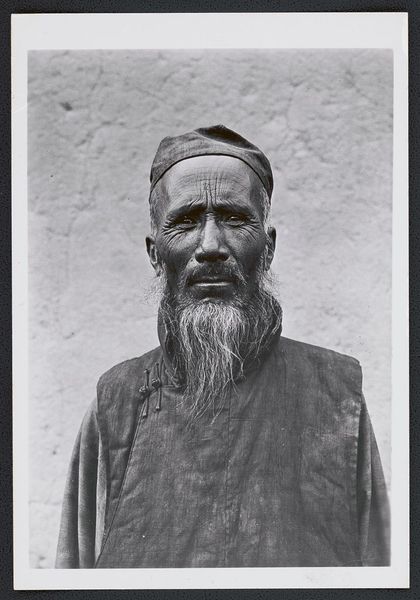
Portrait of a white-bearded elder
A kindly old man, white beard to his chest, in a small cap and a Han-style jacket. It is the standard formal portrait Rock took in the Tibetan-Han border region.
© Library of Congress/ Photo: Dr. Joseph F. Rock
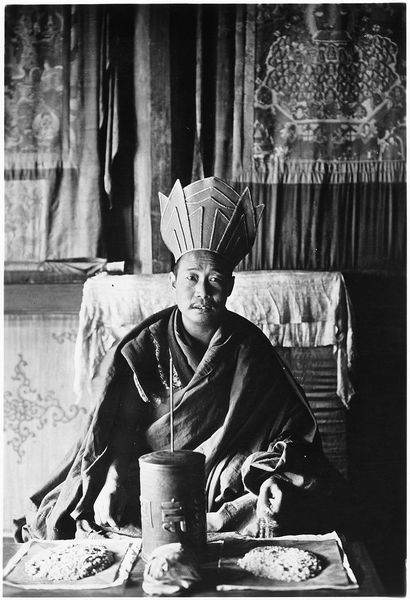
Seated portrait of a senior lama
A senior lama wears a five-pointed ritual crown and sits in the prayer hall, prayer wheel and offerings before him and a giant thangka hanging behind. It is among the most solemn monastic portraits Rock made in Tibet.
© Library of Congress/ Photo: Dr. Joseph F. Rock
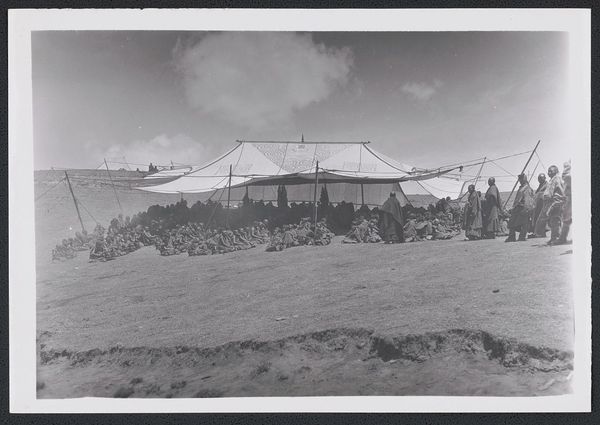
Great ceremony on the grassland
Beneath a great white canopy tent, hundreds of lamas sit on the ground at a great grassland ceremony. Beyond stretches the open plateau meadow under low-hanging clouds.
© Library of Congress/ Photo: Dr. Joseph F. Rock
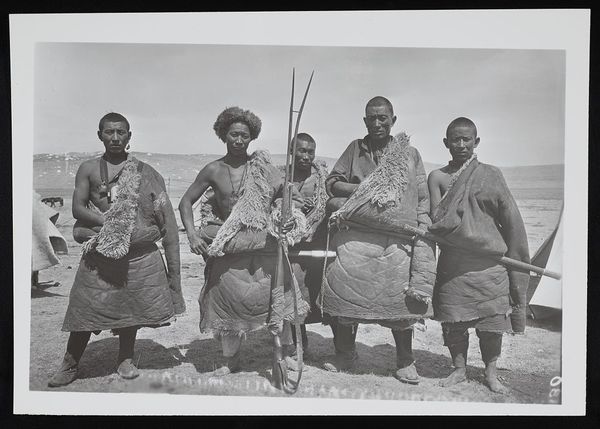
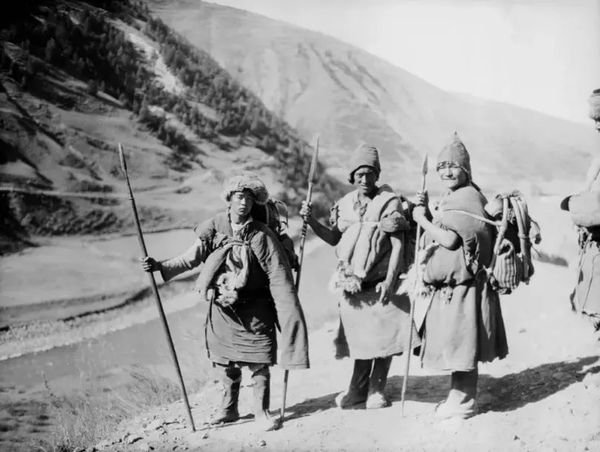
Five armed guards of the Tibetan borderlands
Five Khampa guards in sheepskin coats stand on the grassland, spears and old muskets in hand and knives at their waists. They were the armed escort of Rock's expedition.
© Library of Congress/ Photo: Dr. Joseph F. Rock
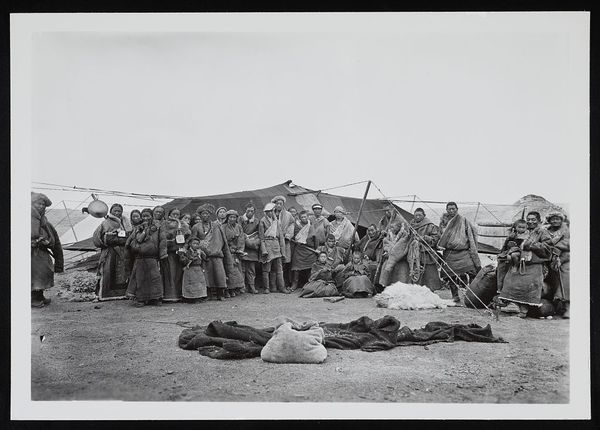
A nomadic family by the black tent
A large group of Tibetans — about twenty of all ages — stands before a great black yak-hair tent, in heavy sheepskin robes, some holding children, some tools, luggage and sacks on the ground. The standard group portrait of a nomadic family on the Tibetan Plateau.
© Library of Congress/ Photo: Dr. Joseph F. Rock
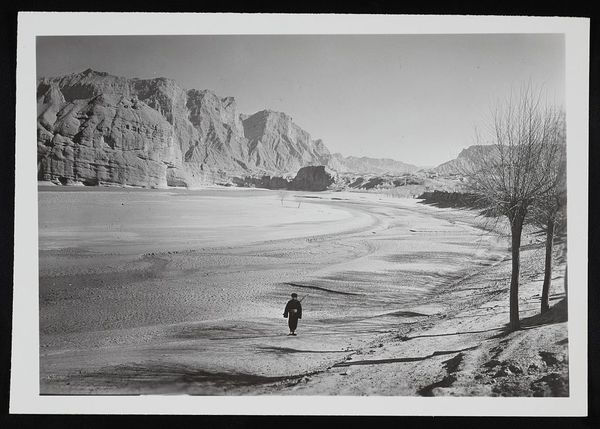
The Yellow River valley
A dry, wide riverbed, red sandstone cliffs rising in the distance, a lone figure walking the riverside path. It is the sweeping landscape Rock photographed on the upper Yellow River at the Qinghai-Gansu border.
© Library of Congress/ Photo: Dr. Joseph F. Rock
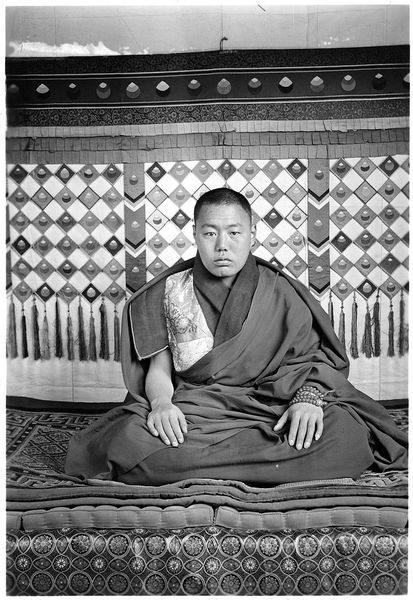
Seated portrait of a senior lama
A young senior lama sits cross-legged, a brocade waistcoat under a crimson robe, prayer beads in his hand, a geometric diamond brocade wall hanging behind.
© Library of Congress/ Photo: Dr. Joseph F. Rock
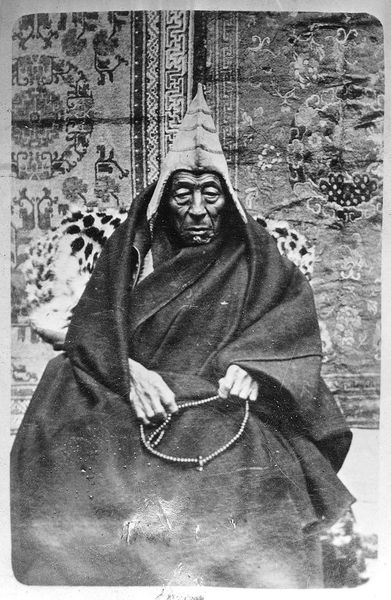
An old lama holding prayer beads
An elderly lama in a pointed hat and heavy robe holds prayer beads in both hands, a leopard skin and brocade thangka spread behind him. The negative bears obvious scratches, yet it records the dignity of an older generation of practitioners.
© Library of Congress/ Photo: Dr. Joseph F. Rock
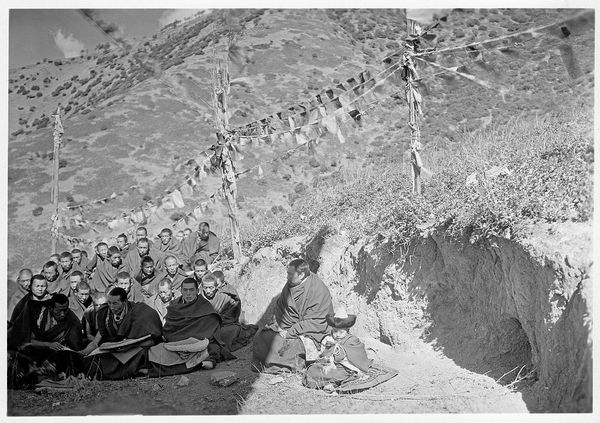
Listening to scriptures on the hillside
On a slope, a long row of lamas sits cross-legged under the earth bank listening to scriptures; prayer flags hang from the pole above, a small child sits at the very front.
© Library of Congress/ Photo: Dr. Joseph F. Rock
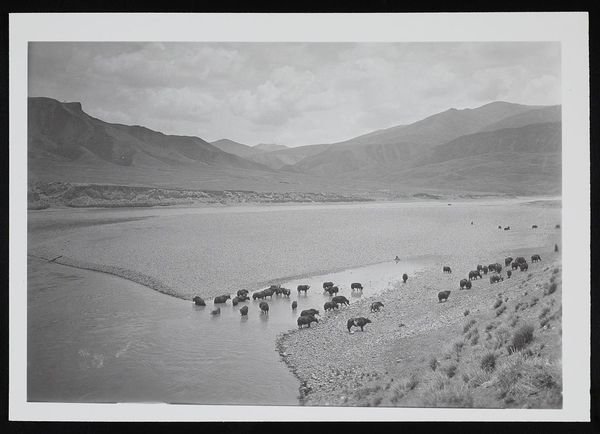
Yaks crossing the Yellow River
A great herd of yaks wades across the wide shallows of the Yellow River, blue-grey mountains stretching beyond. A true scene of high-plateau pasture on the upper Yellow River.
© Library of Congress/ Photo: Dr. Joseph F. Rock

07 /

Elsewhere in Yunnan

The Wuhua Tower in Dali, the Black Dragon Pool in Lijiang, the Jiqing Iron Chain Bridge over the Lancang River — on his way north from Vietnam through Dali to Lijiang in 1922, Rock captured street scenes and buildings that no longer exist today.
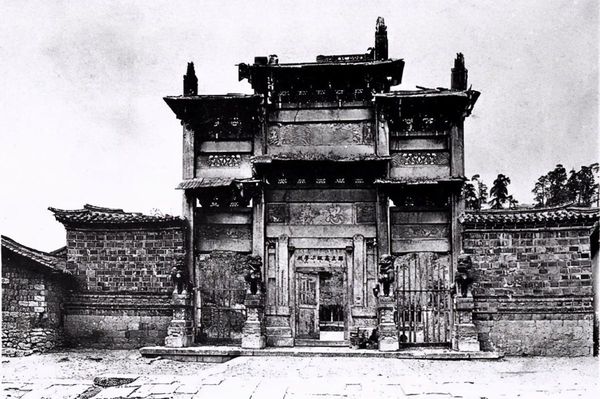
The Zhongyi Arch of Lijiang
The Zhongyi Arch of old Lijiang — a white-marble paifang carved with dragons and phoenixes. Destroyed in the 1950s, Rock's photograph is its only surviving visual record.
© National Geographic/ Photo: Dr. Joseph F. Rock
The Great Stone Bridge of Lijiang
The Great Stone Bridge (Hundred-Year Bridge) of old Lijiang, a single stone arch over the central river, water flowing beneath, Naxi houses and willows on both banks.
© National Geographic/ Photo: Dr. Joseph F. Rock
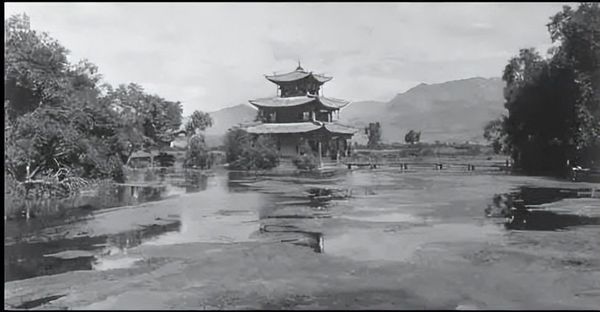
Deyue Pavilion at the Black Dragon Pool, Lijiang
The Deyue Pavilion at Lijiang's Black Dragon Pool (Yuquan Park), an octagonal tower with three eaves, the Jade Dragon Snow Mountain behind. It is the classic viewpoint of old Lijiang.
© National Geographic/ Photo: Dr. Joseph F. Rock
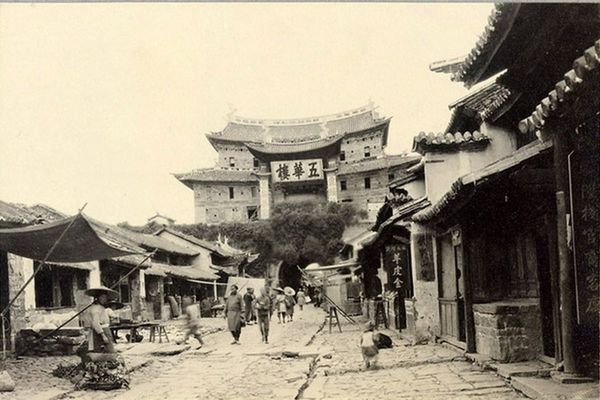
The Wuhua Tower, Dali (1922)
A street of old Dali in 1922, the Wuhua Tower — a famous building of the Nanzhao kingdom, already dilapidated — rising in the distance. Rock passed here on his way north from Vietnam through Dali to Lijiang.
© National Geographic/ Photo: Dr. Joseph F. Rock
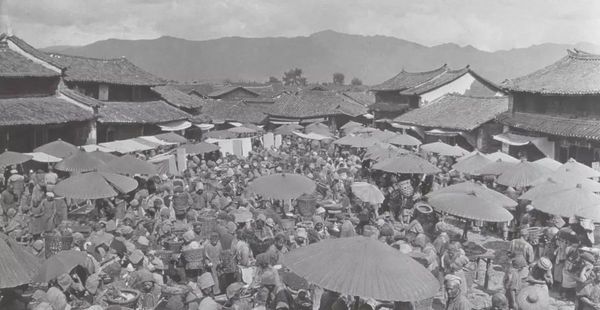
Market before the Zhongyi Arch, Lijiang
The market on the square before Lijiang's Zhongyi Arch: vendors set out their stalls, passersby come and go.
© National Geographic/ Photo: Dr. Joseph F. Rock
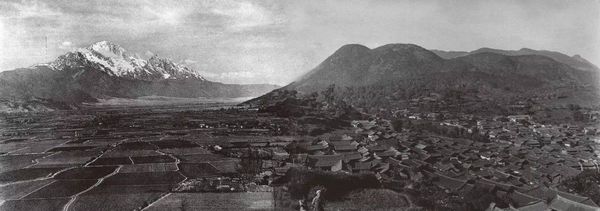
Panorama of old Lijiang (22 Aug 1923)
On 22 August 1923, Rock photographed the whole of old Lijiang from a slope outside town, the black-tiled roofs reaching all the way to the foot of the snow mountains. The shooting date is marked in the lower right corner.
© National Geographic/ Photo: Dr. Joseph F. Rock
The Lancang River valley at Deqin (1920s)
In the 1920s, the Lancang River valley in Deqin county: Tibetans farm the steep hillside fields.
© National Geographic/ Photo: Dr. Joseph F. Rock
Dongzhulin Monastery (Sep 1924)
In September 1924, Dongzhulin Monastery sits on a hillside deep in the Baima Snow Mountains, overlooking the Lancang gorge. The monastery was relocated and rebuilt after the 1950s.
© National Geographic/ Photo: Dr. Joseph F. Rock
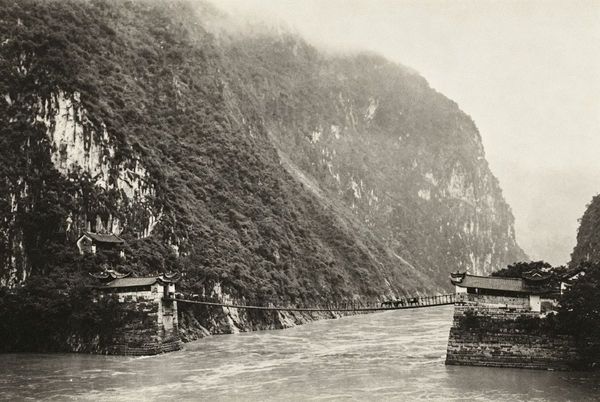
The Jiqing Iron Chain Bridge over the Lancang River (Oct 1922)
In October 1922, the Jiqing Bridge over the Lancang River — among the oldest iron-chain bridges still standing in China, spanning a deep gorge. It was swept away by a landslide in 1986.
© National Geographic/ Photo: Dr. Joseph F. Rock
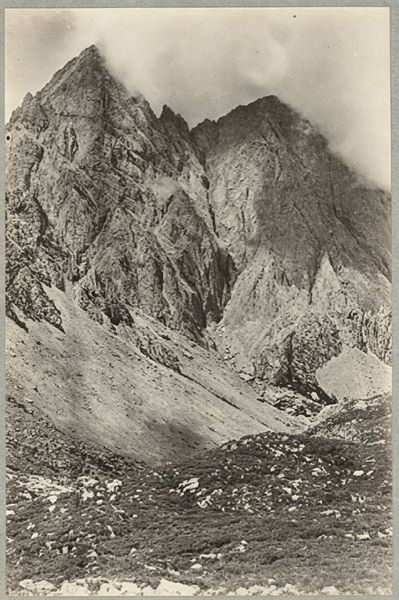
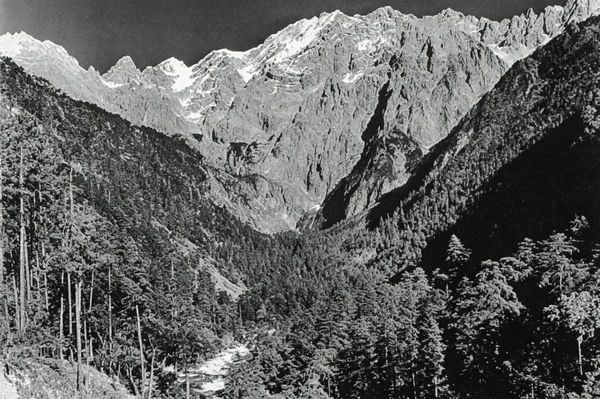
Mountain landscape at Deqin (1922)
In 1922, the steep peaks of the Hengduan range in Deqin county, gorges cut deep between them.
© National Geographic/ Photo: Dr. Joseph F. Rock
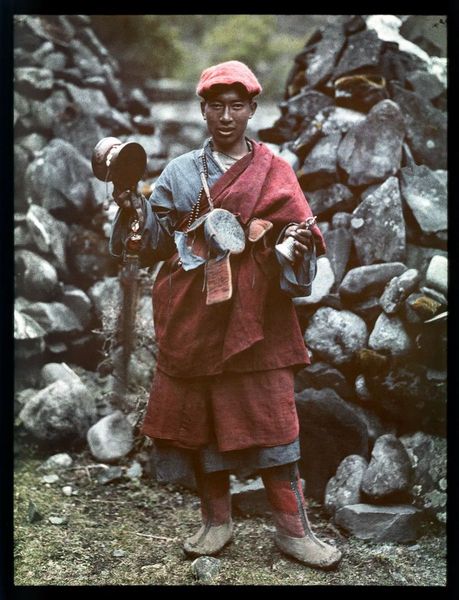
A red-robed monk of western Yunnan (colour)
A red-robed monk of western Yunnan holds a ritual implement, shot on Autochrome colour film.
© XPM · Xie Zilong Photography Museum/ Photo: Dr. Joseph F. Rock
The gate tower of Dali
The gate tower of old Dali, with its double-eaved gable roof. Dali was the first prefectural city Rock entered after arriving in Yunnan.
© National Geographic/ Photo: Dr. Joseph F. Rock
The western face of the Jade Dragon Snow Mountain, 'A-tuo-ta'
The steep western face of the Jade Dragon Snow Mountain, which Rock called “A-tuo-ta.”
© National Geographic/ Photo: Dr. Joseph F. Rock
High-definition panorama of Yongning's Zhami Monastery (1929)
A 1929 panorama of Yongning's Zhami Monastery, shot from a higher angle than the other view, with sharper detail: the red walls and golden roofs of the monastery and the surrounding villages are visible.
© National Geographic/ Photo: Dr. Joseph F. Rock
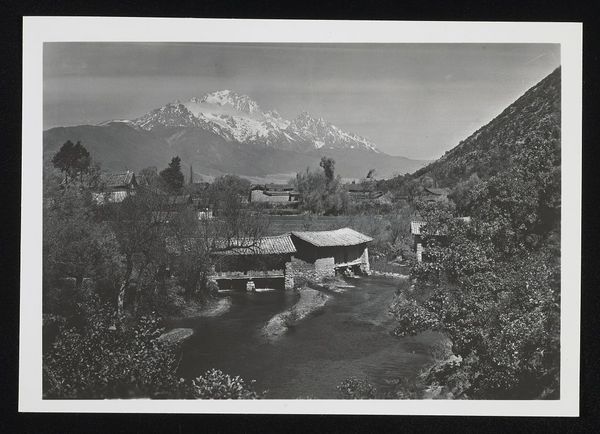
A covered bridge near Lijiang with snow mountains
Near Lijiang, a roofed wooden covered bridge (a wind-and-rain bridge) spans a stream, a village behind it and the Jade Dragon Snow Mountain stretching beyond. Such covered bridges are hard to find around Lijiang today.
© Library of Congress/ Photo: Dr. Joseph F. Rock

08 /

Rock on Camera

Rock through other people's lenses: the explorer in Tibetan dress, the scholar studying seeds in his lab, the guest seated across from the Muli King. Every photograph in this section shows Rock himself — and it was these images that introduced the West to the Austrian who lived twenty-seven years in the deep mountains of the Southwest.
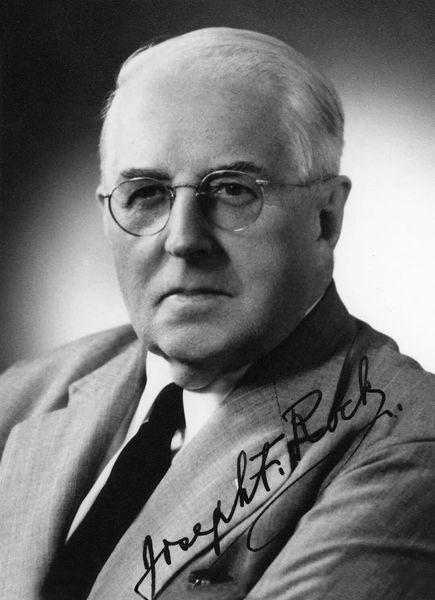
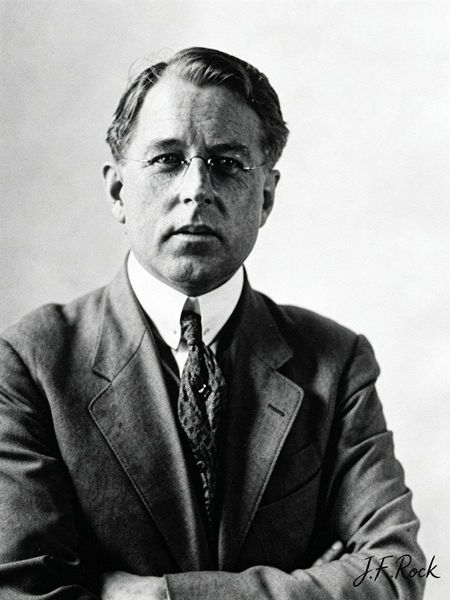
Rock's signed portrait in later years
Rock in his later years, a half-length portrait in a suit, his autograph J.F.Rock in the lower right. It was taken after he left Lijiang for Hawaii in 1949.
© Carnegie Mellon University/ Photo: Rock's travelling photographer
Rock with the Muli King and his retinue
Rock poses with Muli King Chote Chaba before a tent, armed retinue around them. This photograph appeared many times in National Geographic.
© National Geographic/ Photo: Rock's travelling photographer
High-definition: Rock with Ayunshan and three others
A high-definition group portrait of Rock with Yongning chief Ayunshan and three other Yongning nobles. Held by the Hunt Institute for Botanical Documentation at Carnegie Mellon University.
© Carnegie Mellon University/ Photo: Rock's travelling photographer
Rock with armed Naxi guards
Rock in suit and hat stands among six armed Naxi guards with rifles, posing before a tent. It is the classic image of the “Rock expedition” — he always travelled into the wilderness under armed escort.
© Wikimedia Commons/ Photo: Rock's travelling photographer
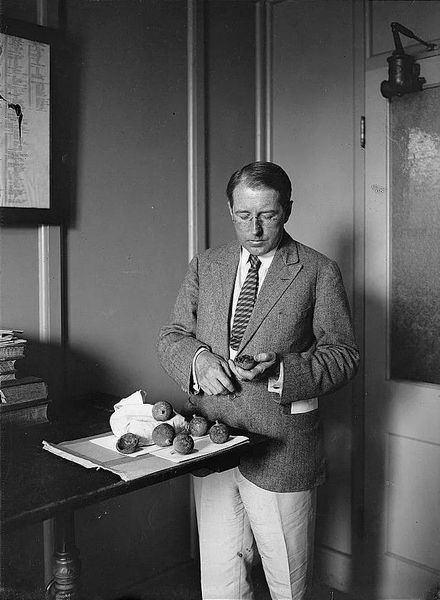
Rock examining plant specimens (1927)
In 1927 Rock bends over the lab at Yuhu Village, examining freshly collected seeds and specimens. He was the first Western scholar to systematically collect the plants of the Hengduan Mountains; over 200 species are named after him.
© National Geographic/ Photo: Rock's travelling photographer
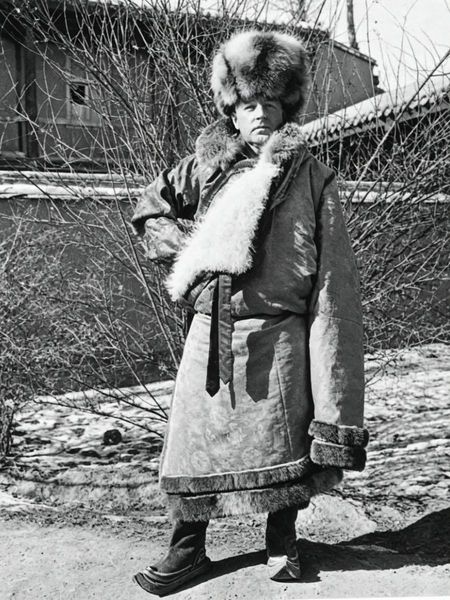
Rock in a fur coat from Zhoni (1928)
In 1928 Rock stands in the snow in a Tibetan robe trimmed with fox fur, a fur hat on his head. It is his best-known portrait from the Zhoni years in Gannan.
© National Geographic/ Photo: Rock's travelling photographer
A young portrait of Rock
A young Rock in a suit, round glasses, a serious expression. His signature J.F.Rock appears in the lower right.
© National Geographic/ Photo: Rock's travelling photographer
Full-length portrait of Rock in Tibetan dress at Chanding Monastery
Rock in ornate brocade Tibetan winter dress and a fur hat stands inside the main hall of Zhoni's Chanding Monastery, painted beams behind. This photograph ran in a National Geographic cover story and introduced the Austrian of the deep Southwest to the Western public.
© National Geographic/ Photo: Rock's travelling photographer
Rock in Yunnan
Rock in Yunnan
A half-length portrait of Rock in Yunnan, a high-resolution scan from Wikimedia Commons.
© Wikimedia Commons/ Photo: Rock's travelling photographer
Rock's expedition in Yunnan
The expedition's group photograph in Yunnan: Rock in the centre, Naxi guards and Tibetan porters lining both sides. High-resolution scan from Wikimedia Commons.
© Wikimedia Commons/ Photo: Rock's travelling photographer

By the shore of Lugu Lake, follow the road Rock walked.

Who was Rock, and why did he come to Lugu Lake seven times? Read the long essay Rock and Lugu Lake.

Our guesthouse sits in Lüjiawan, where Rock once walked. See our rooms →